
Update2026.10.24 (토)


[100 Trillion Yuan is Just the Beginning… What Shadow Debt Reveals About China’s Reality]
China’s government debt has surpassed 100 trillion yuan for the first time in history. However, the real issue lies not in official statistics, but in the hidden local government debt kept off the books. Under IMF standards, China’s actual government debt has already reached 124% of its GDP, raising growing warnings that the very model of buying growth with debt has hit its limits. As the 'iron rice bowl' cracks and deflation takes hold, the Chinese economy is now facing systemic fatigue rather than a mere crisis of growth.
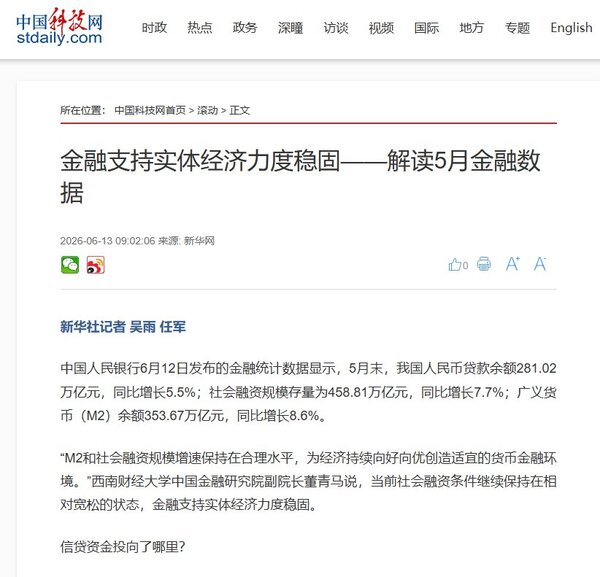
On June 13, the Science and Technology Daily (科技日报), an official state-run newspaper directly under China’s State Council, reported: “According to the May financial statistics released by the People’s Bank of China the previous day, the balance of government bonds stood at 100.6 trillion yuan, up 15.1% year-on-year.” The report added, “Following 94.92 trillion yuan at the end of last year and 99.37 trillion yuan at the end of April this year, the balance crossed the 100 trillion yuan threshold in just one month.” Yet, this is merely the portion officially acknowledged by Beijing.
The Science and Technology Daily further pointed out: “According to the IMF’s 2025 Article IV Consultation Report for China, general government debt under an augmented definition—which includes off-balance-sheet liabilities such as Local Government Financing Vehicles (LGFVs)—reaches approximately 124% of GDP.” It noted that “the 56 percentage point gap between this figure and Beijing’s officially claimed debt ratio of 68% represents the stark reality concealed in the shadows.”
Regarding this, the Atlantic Council, a U.S. think tank, stated: “In its recent Financial Sector Assessment Program report for China, the IMF warned that the 58 trillion yuan in on-balance-sheet LGFV debt poses a severe threat to financial stability.” It also diagnosed that “debt relief may be necessary to resolve the debt-servicing capacity of permanently rolled-over liabilities.”
In response, the Chinese side virtually dismissed the IMF’s recommendations, claiming that “the issue was appropriately resolved through restructuring in 2024.” However, China’s executive director at the IMF put forward total LGFV debt at 44 trillion yuan—a figure three times higher than what was disclosed when the restructuring plan was initially announced.
The conservative U.S. website The Gateway Pundit reported: “The IMF estimates hidden LGFV debt at around $9 trillion, while market estimates run as high as $14 trillion.” It added, “When combined with approximately $7.3 trillion in shadow banking assets and around $7.5 trillion in official local government bonds, the total exceeds $24 trillion even by conservative standards, surpassing China’s official GDP of about $18 trillion.” The Gateway Pundit highlighted that “total non-financial debt (combined government, corporate, and household) stands at 302% to 312% of GDP, a vertical surge from 245% in 2019 in just six years.”
[Local Governments’ 'Fiscal Winter'—The Iron Rice Bowl is Cracking]
The surge past the 100 trillion yuan official debt mark accelerated as hidden local government debt was swapped into explicit bonds. The catalyst was the 12 trillion yuan debt swap program approved by the Standing Committee of the National People's Congress in November 2024. At the time, NBC News reported: “Finance Minister Lan Fo'an announced that Beijing would allocate 6 trillion yuan to local governments—2 trillion yuan annually through the end of 2026—to reduce hidden debt from 14.3 trillion yuan to 2.3 trillion yuan by 2028.”
However, this measure merely alters the form of the debt rather than reducing its total volume. The World Bank’s December 2025 China Economic Update explicitly stated: “While this program enhances the transparency of contingent liabilities and lowers interest burdens, it does not substantially reduce the overall official and off-balance-sheet debt burden of local governments.” It warned that “further structural restructuring of unsustainable debt remains necessary.”
The consequences are already visible on the streets. Cities across China have been failing to pay civil servants' salaries for several years, and even major metropolises like Beijing have seen wage cuts of over 20%. Local governments have resorted to borrowing from corporations and banks just to pay civil servants, while pensions for retirees and staff at advanced military research institutes have also been slashed.
Commenting on this, the Chiangrai Times (CTN) assessed: “The local fiscal reports for the first quarter of 2026 demonstrate that this is not a temporary slowdown, but an official dead-end for the debt-driven infrastructure growth model that built China into a modern powerhouse.” The 'iron rice bowl'—a symbol of lifetime employment security since the Mao Zedong era—is silently shattering.
[The Deflation Trap—A Self-Reinforcing Vicious Cycle of Debt and Stagnation]
What is even more alarming is that the debt problem does not operate in isolation. The Eurasia Group’s Top Risks for 2026 report warned: “China’s housing prices have been falling for four and a half years, representing a destruction of household wealth comparable to the 2008 financial crisis in the U.S., but occurring at a faster pace.”
Beijing hoped that advanced manufacturing would fill the void left by the real estate sector, but state-led investment has resulted in nothing but chronic oversupply. The consequence is 'involution' (neijuan)—a race to the bottom where too many companies chase too little demand by slashing prices. As companies cut wages, workers reduce spending, driving prices down further in a vicious cycle. More than 25% of listed Chinese companies are currently operating at a loss, the highest ratio in 25 years, making existing debt even harder to service.
The IMF’s 2025 Consultation Report noted: “The GDP deflator growth rate has been negative for 10 consecutive quarters, and as of December 2025, the youth unemployment rate (ages 16–24, excluding students) has stagnated at 16.5%.” Foreign policy magazine The Diplomat pointed out last April: “In March 2026, this figure ticked back up to 16.9%,” adding that “China’s economy is growing, but it does not feel like growth—it is an economy sprinting just to stay in place.”
Newsweek quoted Liu Xiaoshu, chief economist at the Bank of Qingdao, who issued a direct warning: “Short-term stimulus packages ultimately rely on increased government borrowing. Over time, accumulating debt elevates fiscal risks, and as more resources are consumed by interest payments, other public spending gets squeezed. This is the exact same mechanism that birthed Japan’s 'Lost Decades' and the crisis in Greece.”
[“The Policy Tools Themselves are Decaying”—Rhodium Group’s Grim Diagnosis]
The most cold-eyed diagnosis of where the root of this multifaceted crisis lies came from a report published by Logan Wright of the Rhodium Group in February 2026. The Rhodium Group defined the situation as a "prolonged decay" rather than a sudden "crisis" or "collapse," stating: “China’s financial and fiscal systems are becoming increasingly inefficient tools for sustaining domestic growth.” The report argued that the policy tools themselves have been exhausted by two decades of political abuse.
The financial system is funneling an increasing share of shrinking new credit into unproductive local governments and state-owned enterprises just to prevent a collapse, while fiscal spending is being funneled through these same debt-laden institutions. The Rhodium Group flatly concluded: “With no reforms currently underway, the decay of policy tools is almost certain to continue into 2026.”
The IMF report also estimated: “In the event of a shock comparable to the Global Financial Crisis, a prolonged deflation could be triggered, dragging GDP 5.4% below the baseline path over five years. Inadequate policy responses would lead to a further accumulation of debt and financial vulnerabilities, resulting in compounding and much higher costs for growth and employment during the ultimate adjustment.”
[The Bill Hidden by Beijing is Being Distributed to 1.4 Billion Citizens]
With no clear signs of recovery in the property market and plummeting land sales revenues, it is difficult for Beijing to abandon its path of propping up growth through expanded fiscal spending and additional bond issuance. The Eurasia Group concluded: “While Beijing possesses the tools to avert an outright meltdown, the process will erode living standards, spill over globally, and leave the world’s second-largest economy drifting in a trap of its own making.”
Ultimately, China’s crisis is not a simple debt crisis. The core issue is that new debt no longer generates new growth. In the past, infrastructure investment and real estate development translated directly into growth; now, a structural dynamic has formed where more debt yields lower growth and deeper deflation.
The dilemma is that Beijing cannot easily halt this mechanism. Stopping debt expansion would jeopardize growth rates, while continuing it compounds future liabilities. Consequently, the Chinese economy is trapped in a self-contradiction: 'it must expand debt to grow, but that very debt eats away at growth.'
The figure of 100 trillion yuan is not just a statistical milestone. It serves as a signal that the growth formula that sustained the Chinese economy for the past two decades has ceased to function. The bill that Beijing has long hidden is now slowly but surely being transferred beyond local governments and financial institutions into the daily lives of its 1.4 billion people.


-중국 푸단대학교 한국연구원 객좌교수
-전 EDUIN News 대표
-전 OUR NEWS 대표
-제17대 대통령직인수위원회 정책기획팀장
-전 대통령실 홍보기획비서관
-사단법인 한국가정상담연구소 이사장
-저서: 북한급변사태와 한반도통일, 2012 다시우파다, 선거마케팅, 한국의 정치광고, 국회의원 선거매뉴얼 등 50여권