Update2026.10.24 (토)

[Opens with the "Tibet Disaster": Omitted from Chinese Official Reports]
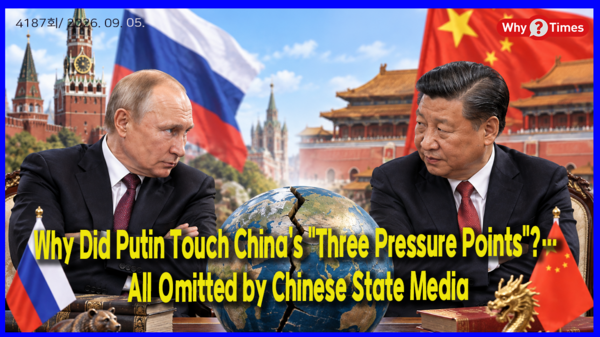
During his bilateral meeting with Chinese President Xi Jinping in Bishkek, Russian President Vladimir Putin brought up three distinct topics: condolences over landslide victims in Tibet, establishing a permanent mutual visa-free regime, and referencing former President Jiang Zemin alongside the Sino-Russian Treaty of Good-Neighborliness and Friendly Cooperation. In isolation, each statement aligns with standard diplomatic protocol. However, these three specific topics—clearly recorded in Kremlin releases and Russian media—were entirely absent from Xinhua News Agency's official coverage of the summit. The question arises: why did Putin, who has navigated relations with Beijing for over two decades, raise multiple issues sensitive to China's domestic narrative in a single meeting?
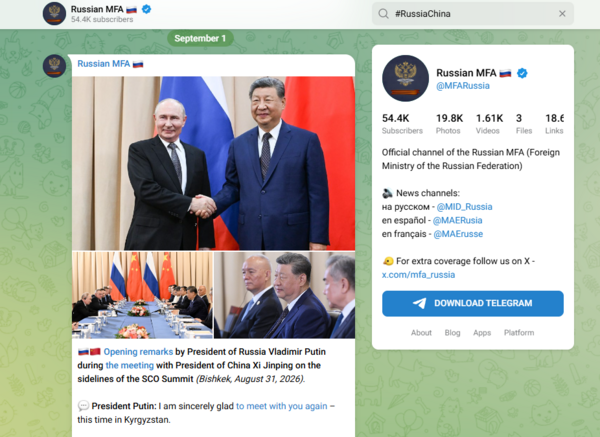
The Russian Foreign Ministry revealed that President Putin opened the bilateral meeting by expressing condolences over the recent landslide near the Nepal border in the Tibet Autonomous Region, prior to discussing strategic cooperation. While offering condolences during major natural disasters is standard diplomatic practice, the Gyirong disaster in Tibet was an issue under tight information management by Beijing.
According to Xinhua News Agency, citing Chinese government figures, the disaster had resulted in 16 deaths and 546 missing persons, including 261 foreign nationals from 23 countries—among them 104 Nepalese, 49 Indians, 18 Americans, 15 Britons, and 3 Russians. The scale triggered international notification to foreign embassies.
Yet Xinhua’s official report on the Xi-Putin meeting omitted Putin’s condolences regarding Tibet. While Xinhua reported that Putin called Sino-Russian relations a "model for international relations" and advocated for deeper trade, energy, and humanitarian cooperation, the Tibet disaster was not mentioned. While this does not prove explicit censorship—given Xinhua reported on the disaster in separate coverage—it highlights a clear discrepancy between the Kremlin's public record and Beijing's official summary.
This omission coincided with stringent actions by Chinese public security against online commentary regarding casualty numbers. Tibet police launched a special crackdown targeting "false rumors," penalizing individuals for posts claiming thousands were missing. Lhasa police subsequently handed down administrative detentions and fines. Against this backdrop, public references to the disaster carried domestic sensitivities.
[Proposes "Permanent Visa-Free Regime": Russia Opens Doors while China Tightens Exit Controls]
Putin’s second proposal was direct. Citing a 43% increase in tourist flows in the first half of the year under current mutual visa-free policies, Putin publicly proposed making the visa-free arrangement permanent if Beijing deemed it viable. Reported by Interfax and TASS, the Kremlin confirmed plans to consult with China on the matter.
TASS noted that Russia's interest stems from economic realities: with Western human and trade exchanges sharply curtailed, expanding Chinese tourism directly benefits Russian aviation, hospitality, and retail sectors. For Moscow, a permanent visa-free regime serves as a practical mechanism to lock in long-term economic ties.
Conversely, China’s policy direction reflects heightened border management. The State Council promulgated revised exit-entry regulations to establish risk-prevention systems for citizens traveling abroad, granting authorities powers to advise against travel to high-risk areas. Furthermore, Radio Free Asia reported tightened internal oversight requiring prior approval for overseas travel among civil servants, state-enterprise staff, academics, and medical personnel. The contrast is stark: while Moscow proposes permanent, unrestricted movement, Beijing is reinforcing internal exit management.
Putin’s specific proposal for a "permanent visa-free regime" was likewise absent from Xinhua's summary, which reduced his remarks to general calls to "deepen people-to-people exchanges."
[References Jiang Zemin: Beyond the "100th Anniversary," Reminders of Border Demarcation]
The third remark touched on historical memory. Highlighting the upcoming 25th anniversary of the 2001 Sino-Russian Treaty of Good-Neighborliness and Friendly Cooperation, Putin referenced former President Jiang Zemin, noting that Jiang would have turned 100 on August 17 and reiterating Russia’s appreciation for his contributions to bilateral ties. On the surface, referencing the treaty—a foundational document of current strategic ties—appears routine, particularly following Beijing’s official commemorations of Jiang's centenary.
However, invoking Jiang Zemin simultaneously recalls the history of Sino-Russian border negotiations. Between 1991 and 2004, Beijing and Moscow finalized agreements resolving the legal status of their 4,300-kilometer shared border. For Moscow, this represented the permanent legal settlement of long-standing territorial disputes.
Within nationalist discourse, border concessions finalized during that era remain a sensitive topic, contrasting with standard historical curricula emphasizing 19th-century unequal treaties. Invoking Jiang Zemin and the border treaty in a high-level summit touches upon complex historical narratives regarding territorial demarcation.
Like the previous two topics, the explicit reference to Jiang Zemin and the treaty's 25th anniversary was excluded from Xinhua's main report on the meeting.
[Did Putin Intentionally Touch Upon Sensitive Points?]
Did Putin inadvertently raise these topics, or was there strategic intent? It is plausible that the topics arose naturally: humanitarian condolences for a natural disaster, economic proposals for visa-free travel, and historical references tied to an upcoming treaty anniversary. Xinhua’s condensed reporting could similarly reflect standard editorial practices for high-level summits.
However, all three topics appeared sequentially in a single meeting conducted by a leader with over two decades of experience navigating Chinese diplomacy. Whether intentional or incidental, the remarks touched upon areas carrying domestic or historical sensitivities for Beijing.
Despite these nuances, the broader strategic alignment between Moscow and Beijing remains intact. Both leaders affirmed the stability of bilateral relations, emphasizing cooperation in energy, trade, and multipolar diplomacy. The official record demonstrates continued alignment on global governance and regional security.
[Why Times Insight]
The Bishkek meeting does not signal a fracture in Sino-Russian relations. Rather, it highlights the importance of observing both official joint statements and the subtle divergences in published summaries. Putin publicly raised three specific issues that Beijing chose not to highlight in its primary diplomatic output.
Russia’s reliance on Chinese markets, tourism, and diplomatic engagement has increased amid prolonged conflict and Western isolation. Concurrently, Beijing maintains strategic cooperation with Moscow while carefully managing its own diplomatic and economic exposure. In this context, Putin's public references function less as a rupture and more as a reflection of the evolving bargaining positions within the bilateral framework.
As strategic alignment continues, the specific terms, expectations, and reciprocal demands between Moscow and Beijing carry increasing weight. The dialogue in Bishkek provides a window into these ongoing calibrations.


-중국 푸단대학교 한국연구원 객좌교수
-전 EDUIN News 대표
-전 OUR NEWS 대표
-제17대 대통령직인수위원회 정책기획팀장
-전 대통령실 홍보기획비서관
-사단법인 한국가정상담연구소 이사장
-저서: 북한급변사태와 한반도통일, 2012 다시우파다, 선거마케팅, 한국의 정치광고, 국회의원 선거매뉴얼 등 50여권