Update2026.10.24 (토)

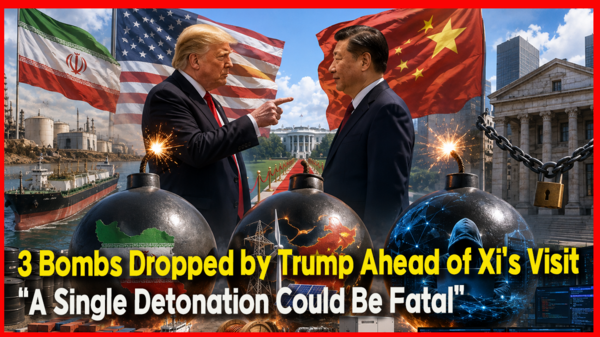
[Bomb One: Iran — “To Keep Tehran Alive, China Must Pay a Price”]
U.S. President Donald Trump has effectively dropped "three bombs" simultaneously on Beijing ahead of Chinese President Xi Jinping’s scheduled visit to the United States this autumn. Washington launched coordinated pressure across three distinct fronts: China’s economic network linked to Iran, its power and energy supply chains, and its state-affiliated cyber infrastructure.
Crucially, while Trump deployed all three measures, he withheld the final, most devastating triggers. Full-scale sanctions against major Chinese banks, explicit targeting of China in power grid executive orders, and broader diplomatic retaliations over cyber intrusions remain held in reserve. Rather than completely blocking Xi’s diplomatic off-ramps, Trump has rigged those exits with explosives, pressuring Beijing to make concessions at the upcoming summit.
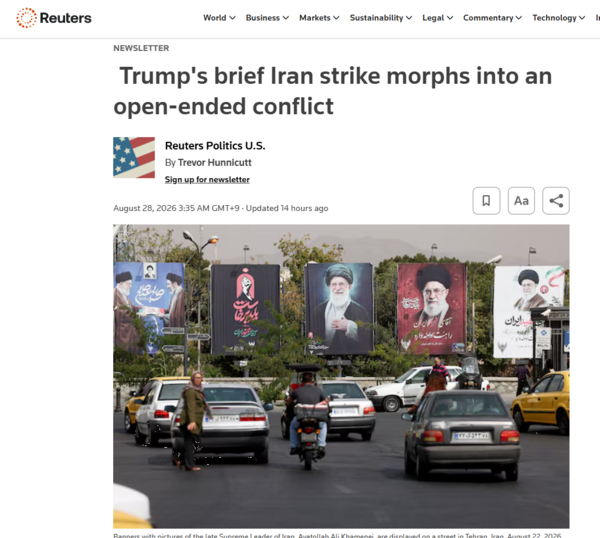
Reuters offered an insightful analysis, noting that while the Trump administration maintains an aggressive stance toward Tehran, it has deliberately refrained from taking direct measures against China—the largest purchaser of Iranian crude. In short, Washington is exerting maximum leverage while leaving the final triggers unpulled.
The first front centers on Iran. U.S. Treasury Secretary Scott Bessent announced "Operation Economic Outcast," framing the launch as an economic D-Day. The U.S. expanded secondary sanctions targeting core financial lifelines of the Iranian regime, including digital assets, technology, gold, aviation, and shipping. This initiative targets overseas networks facilitating Iran's crude oil sales, money laundering, and advanced technology procurement.
The U.S. Department of the Treasury added individuals, corporate entities, and vessels spanning Hong Kong, China, Malaysia, the UAE, Singapore, and Switzerland to its sanctions list. As Secretary Bessent declared an intent to sever the economic lifelines sustaining Tehran, the operational objective extends beyond incremental sanctions toward isolating Iran from the global economic architecture.
However, isolating Iran fully requires confronting Beijing. China remains the primary buyer of Iranian crude, providing Tehran with critical foreign currency revenues despite U.S. sanctions. If Washington intends to effectively block Iranian crude exports, the degree to which it squeezes Chinese firms and financial networks becomes the central variable.
Consequently, the fallout from the U.S. sanctions on Iran extends directly to Beijing. Washington is presenting a clear choice: continue supporting Iran's economic survival and risk escalation with the U.S., or distance itself from Tehran.
[Yet Major Chinese Banks Were Spared: The First Unpulled Trigger]
This tactic exposes Trump's strategic calculus. If the U.S. intended to dismantle China's trade with Iran entirely, it could target major Chinese financial institutions connected to international clearing networks. However, Washington stopped short of triggering a full-scale financial rupture.
Secretary Bessent indicated that the administration is granting relevant nations and firms a window to wind down transactions with Iran. Rather than immediately severing all Chinese entities dealing with Iran from the U.S. financial system, Washington issued an initial warning.
This leaves the primary detonator intact. How and when Trump might leverage additional measures targeting major Chinese financial institutions remains a pivotal variable in upcoming bilateral negotiations.
[Bomb Two: The Power Grid — Purging Chinese Equipment from U.S. Critical Infrastructure]
The second front targets China’s power and energy supply chains—a core pillar of its industrial competitiveness. Reuters reported that President Trump declared a national emergency regarding national security risks posed by foreign equipment in the U.S. bulk-power system. Under the executive order, the U.S. Department of Energy gained authority to restrict the procurement, importation, and installation of foreign transformers, generators, grid-connected inverters, battery energy storage systems (BESS), industrial control systems, associated software, and remote-access functions deemed security threats. The order also establishes mechanisms to impose conditions on, isolate, or replace equipment already installed across U.S. infrastructure.
This measure carries far greater weight than conventional tariffs. While tariffs reduce price competitiveness, this policy establishes a legal framework to exclude specific foreign equipment from critical infrastructure on national security grounds.
Furthermore, as AI data centers and advanced manufacturing facilities drive surge demand for electricity, the power grid itself is becoming a critical arena in the U.S.-China technological rivalry. Reuters noted that for China—which holds massive global market share across battery, solar, and power electronics supply chains—this structural shift represents a major challenge.
[Yet the Executive Order Omits "China": The Second Unpulled Trigger]
A notable element of the executive order is that despite clear strategic focus on Chinese equipment, the text omits explicit mention of China by name. Instead, it establishes a broad regulatory apparatus empowering the U.S. government to designate and restrict foreign entities and equipment evaluated as security risks at a later date.
This distinction is key. Trump loaded the weapon aimed at Chinese manufacturing, but refrained from inscribing "China" directly on the barrel. Should Washington begin explicitly designating Chinese firms or power equipment under this framework, pressure on Beijing will escalate significantly. The second trigger remains firmly in Trump's hands.
[Bomb Three: Cyber Operations — Severing China’s “Eyes and Hands” Directly]
The third front involves offensive cyber actions. The U.S. Department of Justice and the FBI announced court-authorized seizures of domains associated with the "QScan" and "QTRouter" platforms, which were allegedly utilized by state-sponsored Chinese hackers. The Department of Justice linked these operations to an entity known as "QTFY," connected to Nanjing Xinjuzhiwei Network Technology Co., Ltd., identifying the Ministry of State Security (MSS) and the People's Liberation Army (PLA) as primary clients.
The scope of targeted U.S. institutions was extensive, including NASA, the Federal Reserve, the Department of Energy, the Department of Justice, the Department of Health and Human Services (HHS), the National Institutes of Health (NIH), and the U.S. Senate.
Through court-sanctioned domain seizures, U.S. authorities disabled critical communication and authentication channels supporting these platforms. This action signals a transition from diplomatic condemnation of Chinese cyber activity toward direct technical neutralization of offensive infrastructure.
[Holding Back on Full Escalation: The Third Unpulled Trigger]
Despite these aggressive moves, U.S. actions focused primarily on technical disruption. While directly implicating Chinese state organs, Washington refrained from introducing broader diplomatic or financial retaliation packages targeting the Chinese government as a whole. This leaves ample room for further sanctions, legal actions, and diplomatic measures—representing the third unpulled trigger.
Individually, these developments appear as separate policies: Iran sanctions, grid security, and cyber defense. Yet, viewed collectively, a unified strategy emerges.
[Why Did Trump Leave Three Final Triggers Unpulled?]
This design lies at the heart of the current dynamic. On the first front, Washington withheld sanctions against Chinese financial networks. On the second, it avoided explicitly naming China in the grid executive order. On the third, it left room for additional legal, economic, and diplomatic penalties.
The pattern across all three fronts is consistent: striking Chinese interests without delivering a final, absolute blow. Given the timing ahead of President Xi’s planned autumn visit, Trump appears focused on shaping a favorable bargaining position for the upcoming summit rather than causing an immediate collapse of bilateral dialogue. The goal is to constrain Beijing's options before seating President Xi at the negotiating table.
[The Greater Challenge: China’s Current Economic Resilience]
In previous years, Beijing might have responded to U.S. pressure with immediate counter-escalation. However, China’s current domestic economic indicators limit its tactical flexibility. A Reuters survey indicated China’s August manufacturing Purchasing Managers' Index (PMI) is expected to hover at 49.6, remaining in contraction territory for a second consecutive month. Second-quarter GDP growth slowed to 4.3%, while July industrial output and retail sales underperformed expectations. Notably, new Yuan loans contracted by 340 billion Yuan in July—reflecting weak credit demand and cautious borrowing among businesses and households.
China's real estate sector continues to face headwinds. Economists surveyed by Reuters projected a 20% year-over-year decline in Chinese real estate investment for 2026—a sharp downgrade from the 12% contraction forecast in May. Home prices are similarly expected to face continued downward pressure.
While this does not imply an immediate systemic breakdown, the trend is clear. Navigating simultaneous weakness in domestic consumption, real estate, and credit expansion makes absorbing a large-scale economic and financial conflict with the U.S. far more costly for Beijing than in past cycles.
[What Leverage Does Xi Retain?]
President Xi retains significant strategic leverage. China’s vast consumer market, dominant manufacturing capacity, control over critical materials like rare earths, and global scale in clean tech supply chains remain key assets that Washington cannot ignore. Given the deep integration of U.S. businesses into Chinese supply chains, a complete severance of economic ties carries major costs for Washington as well—explaining why Trump stopped short of fully detonating all three measures.
For Beijing, the critical question is not whether counter-measures exist, but whether the domestic economy can absorb the associated systemic costs if deployed. Washington is leveraging this specific vulnerability.
[Why Times Insight]
The actions taken by the U.S. administration over the past 48 hours represent more than isolated policy moves: Iran sanctions pressure China’s external financial and energy ties, grid regulations target its manufacturing and energy exports, and cyber seizures disrupt its intelligence gathering capabilities.
Crucially, Trump retained control over the final detonators on all three fronts: broader sanctions against Chinese banks, explicit geographic targeting in power grid regulations, and escalated legal or financial penalties over cyber intrusions. Viewing these actions purely as punitive measures misses their primary strategic function.
Rather than closing off Beijing's options entirely, Washington has placed leverage at every exit, maintaining control over the triggers. The implicit demand presented to Beijing is clear: negotiate terms now, or face potential activation of the remaining triggers.
This pressure coincides with a challenging domestic economic environment for Beijing. Managing real estate headwinds and soft domestic demand alongside potential large-scale economic friction with the U.S. imposes substantial operational costs on China's leadership.
Ultimately, the key focus of the upcoming U.S.-China summit extends beyond ceremonial diplomacy to tangible bargaining outcomes: what concessions Beijing will offer to neutralize these active pressures, and which triggers Washington might pull should negotiations stall. The strategic contest shaping the summit is already underway.

-중국 푸단대학교 한국연구원 객좌교수
-전 EDUIN News 대표
-전 OUR NEWS 대표
-제17대 대통령직인수위원회 정책기획팀장
-전 대통령실 홍보기획비서관
-사단법인 한국가정상담연구소 이사장
-저서: 북한급변사태와 한반도통일, 2012 다시우파다, 선거마케팅, 한국의 정치광고, 국회의원 선거매뉴얼 등 50여권