


Update2026.10.24 (토)

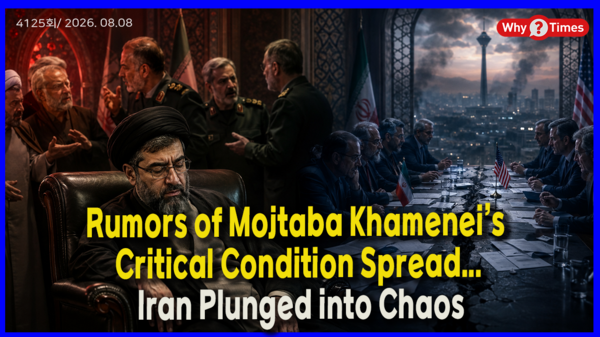
[Supreme Leader Hidden for Six Months... IranWire Reports: "Health in Extremely Serious Condition"]
Reports have emerged stating that Iran’s Supreme Leader, Mojtaba Khamenei, is in extremely critical condition and that news of his passing would not be surprising in the near future. If true, Iran faces another massive political vortex of power succession just six months after the death of his father, Ali Khamenei.
The issue extends far beyond Iran's internal power struggles. Mojtaba is known to be the figure who gave final approval to the ceasefire and Strait of Hormuz negotiations with the United States. The moment his incapacitation is confirmed, the fundamental question—"Who will ultimately guarantee Iran's promises?"—will surface, threatening to shatter the fragile, ongoing ceasefire negotiations.
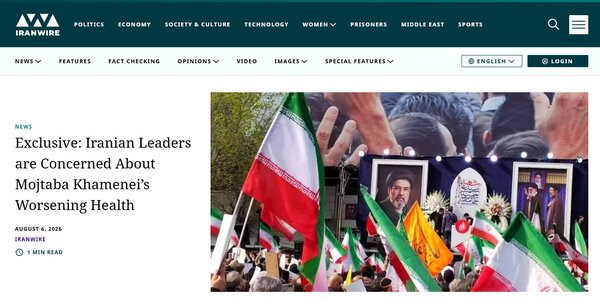
On August 6, the Iranian dissident media outlet IranWire cited multiple sources close to President Masoud Pezeshkian’s administration, reporting that "rumors that Mojtaba’s health condition is extremely critical and that he could die at any moment are widely spreading among the highest ranks of the regime."
IranWire added that "One source described Mojtaba’s physical condition as 'poor' and noted, 'Even if we hear the news of his martyrdom soon, it will not be surprising.'" The outlet further highlighted that "Another source claimed that Mojtaba has not met face-to-face with a single cabinet member since the U.S.-Israeli airstrike on the Supreme Leader’s compound on February 28."
If this report is accurate, it means Iran’s state affairs are currently operating not through a normal reporting and command structure, but through a closed communication network managed by an extremely small circle of confidants and the Islamic Revolutionary Guard Corps (IRGC). If even the President and the Foreign Minister cannot freely access the Supreme Leader, it becomes unclear who holds the ultimate decision-making power over the nuclear issue, the Strait of Hormuz, negotiations with the U.S., and military operations.
[Pezeshkian’s Conflicting Explanations... From "Increased Interaction" to "Hard to Access"]
The conflicting statements made by President Pezeshkian have only fueled these suspicions. In July, he stated that "the level of interaction with our beloved Supreme Leader is growing by the day" and maintained that "Mojtaba continues to direct state affairs."
However, in a recent interview marking his second anniversary in office, Pezeshkian confessed that "it is currently very difficult to gain access to the Supreme Leader," while adding, "his presence gives us reassurance." While trying to emphasize normal administrative functions, he effectively admitted that even the President cannot interact with him smoothly.
Pezeshkian claimed to have engaged in an in-depth, two-and-a-half-hour conversation with Mojtaba in May, but failed to disclose the location, format, or participants of the meeting. Conversely, Foreign Minister Abbas Araghchi reportedly acknowledged that he, too, had been unable to meet Mojtaba in person and that access is restricted to an absolute minimum.
As explanations from government figures fail to align, questions continue to proliferate: "Is Mojtaba actually governing state affairs?" and "Who is drafting the directives issued under his name?"
[No Photos, No Voice... The 'Ghost Leader' Absent Even from National Funeral]
Following his father Ali Khamenei’s death in the U.S.-Israeli airstrikes on February 28, Mojtaba was elected as Iran’s third Supreme Leader by the Assembly of Experts in March. However, since taking office, not a single newly taken photograph, video clip, or recorded audio speech has been made public. State-run media has only sporadically released written messages under his name.
An even more shocking scene unfolded during his father’s funeral. While top Iranian political and military leaders and foreign envoys attended en masse, Mojtaba—the successor and son—was nowhere to be seen. Iranian authorities cited assassination risks and location exposure, yet they failed to explain why even a pre-recorded video or a brief voice message could not be released.
Consequently, speculation has persisted that Mojtaba suffered severe facial and leg injuries during the February airstrikes, rendering him unable to make public appearances or conduct normal governance. Theories ranging from him receiving medical treatment in Russia to hiding in a secret facility within Iran have surfaced, though neither has been officially confirmed.
[Trump Joins In... "90% Gone" Remark Gains Renewed Attention]
IranWire’s report spread rapidly through Israeli media. Outlets such as Channel 14 and The Jerusalem Post reported observations that Mojtaba is in critical condition and has been transferred to a hospital. However, it remains unclear whether claims of his hospital transfer have been independently cross-verified.
Earlier, Saudi outlet Al-Hadath cited Israeli security sources claiming that "Mojtaba is not inside Iran." Conversely, Russian sources claimed he remains within the country.
Remarks made by U.S. President Donald Trump during a Fox News interview—where he stated that "Mojtaba is already 90% gone"—are gaining renewed scrutiny. Rather than an official confirmation of death, the phrase was closer to emphasizing that Iran’s leadership had been effectively incapacitated by U.S. strikes. Nevertheless, the fact that a U.S. president specifically mentioned his status has led to observations that Washington may hold more intelligence than actors inside Iran.
[Mojtaba’s Incapacitation Could Reset Ceasefire Negotiations with the U.S.]
Mojtaba’s death or operational incapacity is not merely a domestic succession issue. It represents a critical variable capable of resetting the painstakingly maintained ceasefire and Strait of Hormuz navigation talks between the U.S. and Iran back to square one.
In April, Axios reported that "amid mounting threats of large-scale U.S. strikes, Mojtaba instructed the negotiating team for the first time since the outbreak of war to pursue an agreement." Axios added that "multiple sources noted that all major decisions went through Mojtaba, and no deal would exist without his sanction."
This implies that the current ceasefire regime relies not on independent decisions by the Foreign Ministry or the Presidential Office, but on the final authorization of the Supreme Leader. If Mojtaba dies or loses decision-making capacity, the negotiating team will simultaneously lose its most vital political shield and final approving authority.
The situation is further complicated internally: while the Presidential Office and Foreign Ministry favor a swift resolution to resume oil exports and lift maritime blockades, the IRGC demands tolls, ship control rights, and preemptive sanction relief. In this context, a power vacuum could quickly ignite a conflict over political direction. Until a new Supreme Leader is elected, even previously agreed-upon terms could face re-evaluation.
This creates a grave dilemma for the U.S. as well. Even if an agreement is reached with Iranian negotiators, Washington cannot be certain whether that deal can effectively bind the IRGC and the military. If the IRGC exploits the power vacuum to seize commercial vessels in the Strait of Hormuz or takes independent military action against U.S. forces, Washington could view this as an Iranian breach of the ceasefire.
Conversely, Iranian hardliners might accuse the U.S. of using the Supreme Leader’s absence to force concessions, demanding a halt to negotiations. Mojtaba's death could thus serve as a trigger that collapses the fragile ceasefire altogether, rather than merely delaying negotiations.
[Confirmed Incapacitation Would Fuel IRGC’s Rise... Seizing Both Power and Arms]
If Mojtaba’s death is confirmed, a constitutional temporary leadership system will be activated, requiring the Assembly of Experts to elect a new Supreme Leader. However, present-day Iran is in no position to execute a normal power succession. Conflicts with the U.S. and Israel have eliminated a vast number of clerical and military leaders, while institutional clashes over talks with the U.S. and the Strait of Hormuz are intensifying.
The faction positioned to benefit most is the IRGC. Mojtaba is evaluated as a figure who rose to Supreme Leader with the IRGC's backing. If he loses the capacity to govern, the only organization capable of filling the power vacuum is the IRGC, which controls both armed force and intelligence networks.
This signifies that Iran could shift from a clergy-centered theocracy toward a de facto military rule centered on the IRGC. Simultaneously, if the Assembly of Experts, the Guardian Council, the Presidential Office, and the IRGC field competing candidates and policy lines, a worst-case scenario—where external war and internal power struggles unfold at once—cannot be ruled out.
[Why Times Insight]
To date, neither the Iranian government nor independent international bodies have officially confirmed Mojtaba Khamenei’s critical condition, hospitalization, or impending death. Initial reports rely heavily on anonymous sources, and various outlets citing them have yet to present sufficient independent cross-verification. Therefore, at this stage, his condition or death cannot be definitively concluded.
However, the core of this crisis goes beyond the truth of a single critical condition rumor. The Supreme Leader of Iran has not released video or audio for nearly six months, failed to appear at his father’s funeral, and even the President admits to having difficulty accessing him. These facts alone provide ample ground to question the normal functioning of Iran’s highest authority.
The question shaking Iran right now is not simply "Is Mojtaba alive?" The essence is: "Is he actually governing?" and "If not, who is giving final authorization to Iran's negotiations and military actions?"
The moment Mojtaba’s incapacitation is confirmed, Iran could simultaneously fall into a triple crisis: a struggle over supreme power succession, the IRGC’s seizure of power, and the collapse of ceasefire negotiations with the United States. The life or death of the Supreme Leader has transcended domestic Iranian politics to become the single largest variable shaping the direction of the Strait of Hormuz and the broader Middle East war.

-중국 푸단대학교 한국연구원 객좌교수
-전 EDUIN News 대표
-전 OUR NEWS 대표
-제17대 대통령직인수위원회 정책기획팀장
-전 대통령실 홍보기획비서관
-사단법인 한국가정상담연구소 이사장
-저서: 북한급변사태와 한반도통일, 2012 다시우파다, 선거마케팅, 한국의 정치광고, 국회의원 선거매뉴얼 등 50여권



