


Update2026.10.24 (토)

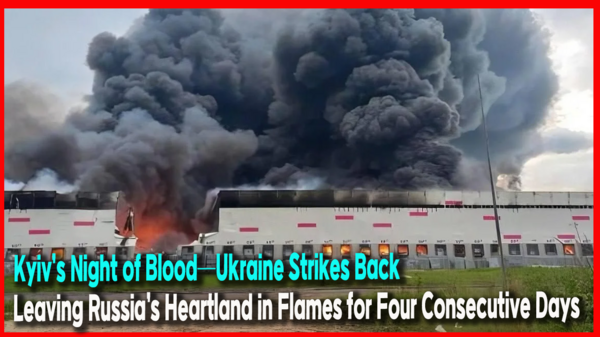
[Flames Spread to Moscow’s Doorstep… Simultaneously Hitting Industrial and Logistics Networks]
On the night of July 31, Russian missiles and drones breached Kyiv's air defense network, striking the heart of the Ukrainian capital. However, within just a single day, Ukraine launched a fierce counteroffensive, attacking a Russian vessel in the Black Sea and an oil refinery complex located 1,600 kilometers from the border. Subsequently, Ukraine expanded its target array to include strategic bomber bases, industrial parks near Moscow, and the logistics network of Russia’s largest e-commerce enterprise. As Patriot interceptor stocks ran dangerously low, rather than attempting to intercept incoming missiles, Ukraine began directly striking the heart of Russia—where the missiles and bombers originate, and where war funds and military supplies are manufactured. In short, Russia received far more than it bargained for.
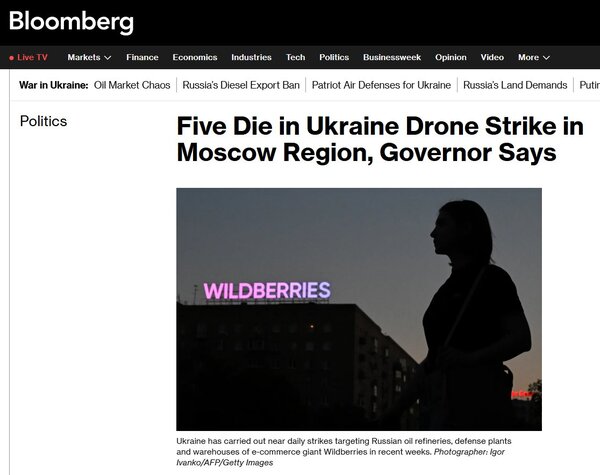
Bloomberg reported on August 5 that "Ukrainian forces launched a sweeping drone attack across Russia overnight, including the Moscow region." The outlet noted that "the attack hit the Novoselki Industrial Park in the Chekhov district of the Moscow region, leaving at least 5 dead and 10 injured, while triggering massive fires at several facilities, including warehouses."
Bloomberg further added that "the strikes did not end near Moscow," stating that "a logistics center belonging to Wildberries, Russia’s largest e-commerce platform, was attacked in both the Leningrad region and the Russian-occupied Crimean Peninsula. Furthermore, explosions and fires were reported at the Kirishi industrial facility in the Leningrad region and the Syzran oil refinery in the Samara region."
According to Bloomberg, "Ukraine claims that Wildberries supplies drone parts and various military gear to the Russian armed forces," adding that "consequently, since mid-July, Ukraine has launched a series of strikes against approximately 20 Wildberries logistics centers across Russia." This indicates a calculated attempt to undermine the Russian military's supply chain and war economy simultaneously, rather than a simple assault on commercial distribution infrastructure.
If Russia’s largest online distribution network is paralyzed, it will not only disrupt the procurement of military supplies but also inflict direct damage on numerous vendors and consumers. This serves as a form of "long-range sanctions" designed to make the Russian public feel the tangible economic costs of war, preventing them from viewing the conflict as an isolated event.
[Engels Bomber Base and Saratov Oil Refinery Penetrated]
Two days prior, on August 2, far more sensitive targets were struck. The General Staff of the Armed Forces of Ukraine announced, "We simultaneously hit Rosneft's oil refinery in the Saratov region and the Engels Air Force Base."
Engels Base is a critical facility housing Tu-95MS and Tu-160 strategic bombers deployed in airstrikes against Ukraine. Attacking this base signifies a shift toward neutralizing Russia's strike capability on the runway before takeoff, rather than trying to intercept bombers mid-air.
The Saratov Oil Refinery is also a major Russian energy facility that has been repeatedly targeted since the outbreak of the war. As of 2023, its annual refining capacity was reported to be approximately 4.8 million metric tons. On the same day, the Ukrainian military stated, "We also struck an oil storage facility in the Kaluga region and an attack drone storage and launch facility in the Bryansk region." By targeting bombers, drones, and aviation fuel along a single operational axis, Ukraine demonstrated that its target selection has evolved beyond simple retaliation into a systematic campaign against Russia’s entire air warfare capability.
[Black Sea Cargo Ship Sunk… Oil Hub 1,600 km Away Attacked]
The catalyst for this chain offensive occurred on August 1. The Moscow Times reported, "A Ukrainian maritime drone attacked and sank the Russian cargo ship Yanina in the waters near Novorossiysk," adding that "all 17 crew members on board were rescued."
President Volodymyr Zelenskyy stated that "the vessel was a sanctioned Russian cargo ship" and was "sunk by a precise strike conducted by the Ukrainian Defense Forces." Conversely, Russia's state atomic energy corporation, Rosatom, condemned the strike as an "act of piracy," claiming the vessel was transporting civilian cargo.
On the same day, the Security Service of Ukraine (SBU) deployed long-range drones to strike three large oil refining facilities in Ufa, Republic of Bashkortostan, located roughly 1,600 kilometers from the border. The targets were the Bashneft-Ufaneftekhim, Bashneft-Novoil, and Bashneft-Ufa refineries. The combined annual crude oil processing capacity of these facilities is known to exceed 23 million metric tons.
The fact that Ufa—1,600 kilometers away from the border—came under attack sent shockwaves through Russia. It shattered the Kremlin’s core narrative that the deep rear, far removed from the Ukrainian front line, remained safe. President Zelenskyy clearly defined the nature of the offensive by stating, "Ukraine is bringing the war back home to Russia."
[Kyiv’s 'Night of Blood' Pulls the Trigger]
Ukraine’s four-day offensive is deeply linked to Russia’s massive airstrike that battered Kyiv from the night of July 31 into the early morning of August 1. Russia launched a barrage of missiles, including ballistic missiles, alongside attack drones. Successive explosions rocked central Kyiv, damaging residential areas, schools, and diplomatic facilities.
Crucially, Ukrainian air defenses were unable to intercept the majority of the ballistic missiles. President Zelenskyy publicly highlighted the acute shortage of interceptor missiles for the Patriot air defense system. Escalating military tensions in the Middle East—which triggered a surge in demand for U.S. air defense assets—were cited as a key factor behind Ukraine's supply bottleneck.
Ukraine was left with few alternatives. Merely waiting for expensive interceptor missiles to arrive meant leaving Kyiv and other major cities vulnerable to repeated strikes. Ultimately, Ukraine shifted its strategic weight away from attempting to intercept every incoming missile toward preemptively destroying bomber bases, drone launch sites, oil refineries, and military logistics networks.
This shift is not an "abandonment of defense," but a transformation in how defense is conducted. Ukraine has transitioned from a passive defense—attempting to shoot down incoming weapons in the sky—to an active defense that eliminates those weapons at their points of origin, storage, and launch.
[Russia’s Rear Guard Is No Longer a Safe Zone]
The true significance of this offensive lies not in the frequency of the strikes, but in the interconnectedness of the targets. In the Black Sea, Ukraine sank a logistics ship; in Ufa and Saratov, it struck oil refining facilities. At Engels, it targeted the operational framework of strategic bombers, while in Bryansk, it hit drone storage and launch sites. In Moscow and the Leningrad region, it disrupted industrial complexes and major distribution networks.
Connecting these dots reveals Ukraine’s intent clearly: to slash Russian oil revenues, disrupt the movement of military supplies, and degrade Russia's strike capacity before missiles and drones can ever launch. The target is no longer just the Russian military at the front lines, but the entire economic, energy, and logistical ecosystem that sustains it.
This is precisely why President Zelenskyy emphasized that "this war is no longer a regional dispute confined to the territorial issues of the Donbas." As Iranian drones and missiles, alongside North Korean artillery shells and troops, continue to shore up Russia's war effort, Ukraine is likewise expanding the conflict deep into the Russian mainland.
[Why Times Insight]
Kyiv’s night of blood failed to break Ukraine. Instead, it transformed a desperate crisis—the shortage of Patriot interceptor missiles—into a catalyst for an offensive strategy targeting the very foundation of Russia's war machine.
The offensive that began on August 1 started with the sinking of a vessel in the Black Sea and spread to an oil refinery complex 1,600 kilometers in the rear, strategic bomber bases, drone launch sites, industrial parks near Moscow, and massive logistics networks. This is not indiscriminate revenge driven by anger, but a meticulously planned campaign designed to systematically sever Russia’s oil, aviation, and logistical capabilities piece by piece.
For Vladimir Putin, this represents the most painful shift of all. The assumption that the Russian public could passively watch the conflict from a safe distance while the Kremlin scorched Ukrainian cities is crumbling. The flames that once engulfed Kyiv have now begun to consume the heart of Russia.


-중국 푸단대학교 한국연구원 객좌교수
-전 EDUIN News 대표
-전 OUR NEWS 대표
-제17대 대통령직인수위원회 정책기획팀장
-전 대통령실 홍보기획비서관
-사단법인 한국가정상담연구소 이사장
-저서: 북한급변사태와 한반도통일, 2012 다시우파다, 선거마케팅, 한국의 정치광고, 국회의원 선거매뉴얼 등 50여권



