Update2026.10.24 (토)

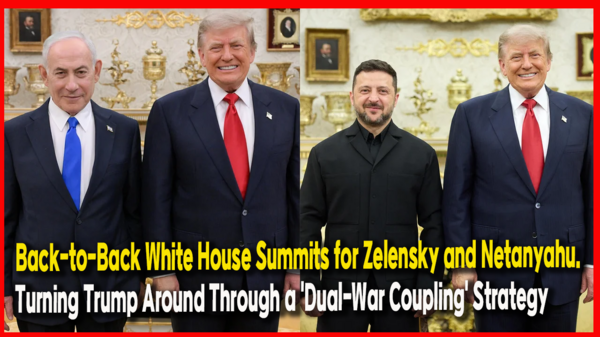
[Zelensky Highlights Russia-Iran Alliance, Netanyahu Scrambles Over Initiative in Iran War]
The fortunes of two war-era leaders who met U.S. President Donald Trump at the White House on the same day diverged sharply. Volodymyr Zelensky, President of Ukraine, etched his image into Trump’s mind as a strategic partner fighting America's common enemies by emphasizing deep-strike capabilities in the Caspian Sea and the military linkage between Russia and Iran. Conversely, Israeli Prime Minister Benjamin Netanyahu faced public pushback from Trump even before raising the topic of strikes on Iranian nuclear facilities. While Zelensky—who famously clashed head-on with Trump at the White House in 2025—returned looking like a "winner," Trump’s vigilant gaze, determined to maintain total initiative over the war, is now fixed on Netanyahu.
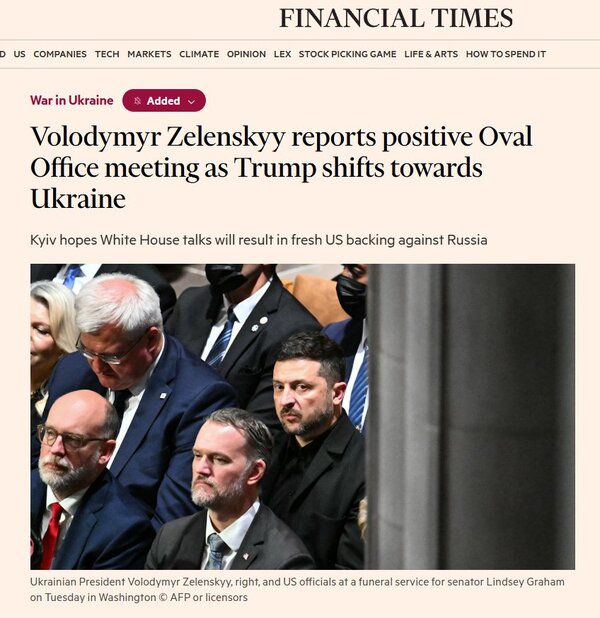
Reports indicate that President Zelensky held a private meeting lasting over an hour with President Trump in the White House Oval Office, with both sides discussing strengthening Ukraine's air defense network, licensing the production of Patriot interceptor missiles, and future diplomatic processes.
Immediately following the meeting, Zelensky stated, "I had a good meeting with President Trump," expressing gratitude "for everything we are doing together to protect the lives of the Ukrainian people and advance peace." He further explained, "We discussed several initiatives, including a license to produce Patriot interceptor missiles, and working-level teams from both countries will coordinate the details of follow-up discussions."
Specifics regarding new military aid or a finalized agreement on Patriot production licenses were not made public. However, the atmosphere of the meeting was night and day compared to February 2025. Back then, the two leaders clashed head-on in the very same Oval Office, prompting the Trump administration to temporarily suspend military aid and intelligence sharing with Ukraine. Zelensky, who had essentially been shown the door at the White House, returned 1 year and 5 months later as a partner to whom Trump pays keen attention.
In recent weeks, Trump has displayed renewed optimism regarding Zelensky and Ukraine. This stems from Trump being deeply impressed by how Ukraine has sustained its war effort while expanding counterstrikes deep inside Russian territory. A senior White House official remarked, "President Trump likes winners, and Zelensky is increasingly looking like a winner."
[Zelensky Convinces Trump Not with Rhetoric, But with Battlefield Results]
The core factor that shifted Trump's perception was not diplomatic rhetoric, but the resilience Ukraine demonstrated on the battlefield. Ukraine’s drone production exploded from approximately 5,000 units annually in 2022 to millions in 2026. Utilizing these assets, the Ukrainian military expanded its strike range beyond Russian oil refineries, munitions plants, airfields, and railway networks all the way to the Caspian Sea.
The turning point in restoring relations was a brief conversation during Pope Francis’s funeral last April. The relationship between the two leaders began to shift following a 15-to-20-minute meeting at St. Peter's Basilica. This, combined with mediation by European leaders and U.S. Congressional Republicans, alongside the explosive growth of Ukraine's drone industry, changed Trump's perspective.
Zelensky is now shedding the image of a leader unilaterally begging the U.S. for aid. By demonstrating Ukraine's ability to disrupt not only Russia—a primary U.S. adversary—but also the military supply networks connected to Iran, he is framing himself as an 'action-ready partner' indispensable to Trump.
[Strikes in the Caspian Sea: Linking the War in Ukraine with the War Against Iran]
The strikes in the Caspian Sea, which took place just prior to this summit, provided crucial momentum for this strategy. On the 25th, Zelensky announced that "Ukrainian forces launched long-range attacks in the Caspian Sea targeting Russian Molniya-class missile boats and vessels identified as being used for military logistics."
During this operation, one crew member of an Iranian vessel was killed and another injured. Iran denounced the strike as a "hostile and criminal act," summoning a Ukrainian diplomat in protest. Iranian Foreign Minister Abbas Araghchi stated, "This incident cannot be overlooked," adding that Iran would "coordinate its response with Russia and the European Union."
Ukraine, however, actively highlighted military cooperation between Russia and Iran following the event. Zelensky even raised allegations that Russia supplied Iran with satellite intelligence used to monitor U.S. military facilities in the Gulf region. Politically leveraging the Caspian Sea incident, Ukraine effectively merged the war against Russia and the confrontation with Iran into a single strategic matrix.
This message is highly intuitive to Trump. If Russia and Iran represent a combined threat to the U.S., supporting Ukraine is no longer a matter of pouring money into a European war. Arming Ukraine becomes a high-return investment that simultaneously destabilizes Russia’s war capacity and Iran’s military supply chain.
[Graham’s Final Legacy: Shifts Among Pro-Trump Right-Wingers]
The summit coincided with the funeral of Senator Lindsey Graham, a symbolic figure of support for Ukraine. Zelensky expressed his condolences to Trump over Graham’s passing, honoring him as a "true friend of Ukraine." In the U.S. Senate, momentum is building once again around bipartisan sanction bills targeting Russia and entities aiding its war effort—legislation Graham had championed in his final days.
Also notable is the shift in stance by Laura Loomer, a hard-right influencer close to Trump. Having previously opposed aid to Ukraine, Loomer recently visited Kyiv and witnessed Russian missile strikes firsthand, subsequently arguing that key figures on the American right had been misled by Russian propaganda.
These shifts do not automatically guarantee an immediate policy pivot by Trump. However, it is clear that within the Trump camp, the perception of Ukraine is shifting from a 'burden demanding endless aid' to a 'force actively pushing back Russia.'
[Trump Draws the Line for Netanyahu: "I Already Know the Iran Intelligence"]
The atmosphere surrounding the summit with Prime Minister Netanyahu, who visited the White House right after Zelensky, was decidedly different. Ahead of the meeting, Trump expressed displeasure regarding reports that Netanyahu intended to discuss 'Pickaxe Mountain,' an underground Iranian nuclear facility. Trump remarked, "Bibi doesn't need to tell me about that."
Trump warned that "the U.S. Space Force is monitoring that region with world-class surveillance assets," adding that "if negotiations collapse, the U.S. can easily strike Pickaxe Mountain." While keeping military options against Iranian nuclear facilities on the table, this was a clear declaration that the initiative to determine whether and when to attack belongs to him, not Israel.
Following the meeting, the Israeli side clarified that "the Pickaxe Mountain issue was not actually discussed." Instead, they stated that "the two leaders discussed the shared goal of preventing Iran from acquiring nuclear weapons and plans to expand the Abraham Accords". The White House also described the meeting as "positive and productive," though no concrete final agreements were disclosed.
While Zelensky acknowledged Trump’s leadership and positioned himself as a valuable partner, Netanyahu found himself reined in by Trump over the pace and direction of the war against Iran.
[Why Times Insight]
The core takeaway from these back-to-back summits is not about which leader Trump favors more—Zelensky or Netanyahu. It is a matter of who controls the pace, intensity, and ultimate decision-making power over these conflicts.
Zelensky accurately targeted Trump’s affinity for "winners." By demonstrating Ukraine's drone warfare achievements and deep-strike capabilities inside Russia, while accentuating the operational linkage between Russia and Iran, he repositioned himself as a high-utility partner for the United States. Conversely, Netanyahu faced public warnings from Trump after appearing to drag the U.S. into an escalated strike on Iranian nuclear sites.
In the end, what moved Trump was not Zelensky’s entreaties, but his results on the battlefield. Capitalizing on the Caspian Sea incident, Ukraine strategically tied its war with Russia to the broader conflict with Iran, delivering a compelling pitch to Trump: "Support us, and you can pressure two of America's primary adversaries at the same time."
A final deal on Patriot production licenses or fresh military aid packages remains to be confirmed. Nevertheless, the fact remains that Zelensky—who clashed publicly at the White House in 2025—is now viewed as a leader who "increasingly looks like a winner." Trump drawing a clear boundary with Netanyahu on the very same day reveals a new principle governing the White House: it will embrace leaders who acknowledge U.S. leadership and deliver proven results, while showing zero hesitation to check those attempting to drag America into unwanted wars.


-중국 푸단대학교 한국연구원 객좌교수
-전 EDUIN News 대표
-전 OUR NEWS 대표
-제17대 대통령직인수위원회 정책기획팀장
-전 대통령실 홍보기획비서관
-사단법인 한국가정상담연구소 이사장
-저서: 북한급변사태와 한반도통일, 2012 다시우파다, 선거마케팅, 한국의 정치광고, 국회의원 선거매뉴얼 등 50여권