
Update2026.07.24 (금)

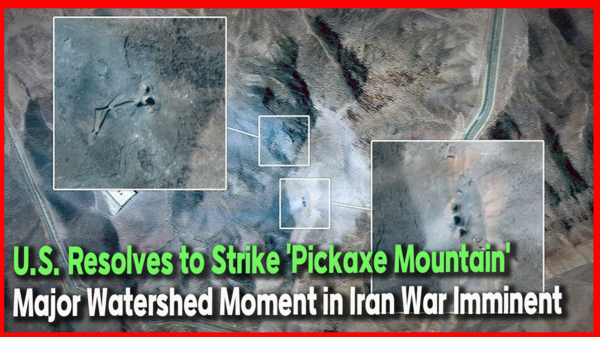
[The Last Nuclear Facility Left Untouched Last Year… U.S. Countdown to Heavy Bomber Deployment]
The United States is ultimately targeting "Pickaxe Mountain" (Kuh-e Kolang Gaz La), an underground nuclear site considered the final core piece of Iran's nuclear program. This is the facility that the U.S. ultimately refrained from attacking last year when it launched heavy airstrikes against Iran's Natanz, Fordow, and Isfahan nuclear sites. However, reports now indicate that the U.S. has notified Israel of plans to deploy heavy bombers. Analysts suggest this indicates a strategic shift from simple retaliatory strikes to completely neutralizing Iran’s nuclear capability.
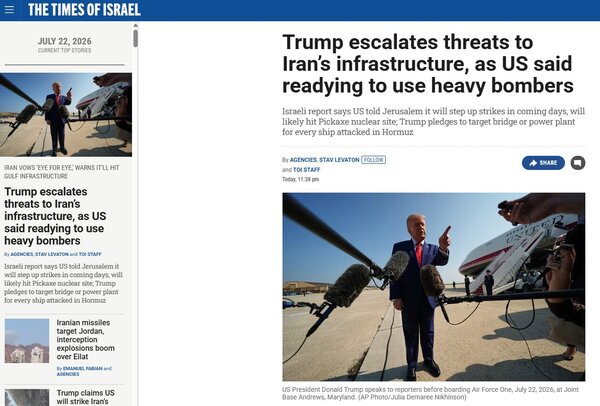
The Times of Israel (TOI) reported on the 23rd that "the U.S. is preparing airstrikes targeting the underground facility at Pickaxe Mountain near Natanz within the coming days, and has communicated its heavy bomber deployment plan to Israel." This marks the first time this year that the deployment of heavy bombers has been raised in U.S.-Israeli joint operations against Iran. It is seen as a clear signal that Washington intends to eliminate the final critical target that was left untouched even during last year's 'Operation Midnight Hammer.'
TOI noted, "Last year, the U.S. extensively struck nuclear facilities such as Natanz, Fordow, and Isfahan, but excluded Pickaxe Mountain from its target list." It explained that this decision was based on military assessments that "the facility is built deep inside granite rock, making complete destruction difficult to guarantee." TOI analyzed that "the fact that the U.S. is now considering heavy bombers against this site suggests the objective of the war is shifting beyond mere retribution toward ending Iran's nuclear program altogether."
[Why 'Pickaxe Mountain' Specifically?]
Pickaxe Mountain is a massive underground nuclear facility located just south of the Natanz uranium enrichment site. It is known to be a new facility built by Iran after Israel destroyed its centrifuge production plant, and it has never once been directly attacked.
The Wall Street Journal (WSJ) reported that "Israeli intelligence assesses Iran moved thousands of centrifuges to this site last autumn." CNN similarly noted that "there is a possibility that a portion of 60% highly enriched uranium is stored in this facility," adding, "While independent verification has not yet occurred, if true, Pickaxe Mountain effectively serves as the 'last heartland' of Iran's nuclear program."
For these reasons, the U.S. and Israel view Pickaxe Mountain not merely as an ordinary nuclear site, but as 'the final insurance policy of Iran's nuclear program'. Even if existing nuclear sites suffer major damage, as long as this facility remains intact, Iran retains the ability to restore centrifuge production and uranium enrichment capabilities. Ultimately, the U.S. aim is not just to destroy a single facility, but to eliminate the foundational infrastructure that allows Iran to rebuild its nuclear program.
[Trump: "If They Rebuild, We Will Strike Again"]
President Trump has effectively signaled this strike policy publicly. Speaking at the White House on the 21st, he stated, "If there are facilities they try to reconstruct, we will hit them," adding, "Wherever they are considering nuclear weapons, we will strike heavily." He went on to say, "We’ll be hitting that area very soon, and there’s not a thing they can do about it," demonstrating clear intent to execute beyond mere verbal warnings.
The following day, President Trump escalated the warnings further. Posting on Truth Social, he declared that whenever Iran attacks ships in the Strait of Hormuz, the U.S. will bomb bridges and power plants in or near Tehran. Extending target sets beyond nuclear facilities to key civilian infrastructure signals a significant broadening of the war's scope. Secretary of State Marco Rubio also remarked that "Iran broke last month's agreement in just two weeks," hinting that diplomatic avenues have narrowed considerably.
[Iran Threatens "War Expansion" in Retaliation—A Sign of Deep Anxiety]
Iran has also promised hardline retaliation. Mohammad Bagher Ghalibaf, Speaker of the Iranian Parliament, warned that "the Strait of Hormuz will never return to its pre-war state," adding, "If we cannot sell crude oil, no one will be able to sell oil."
Foreign Minister Abbas Araghchi stated, "We will respond powerfully and decisively to any attack, including those on our infrastructure," while the Khatam al-Anbiya Central Headquarters declared that "if the U.S. attacks nuclear facilities, it will be treated as an act of expanding the war." Hardline Iranian media outlets have even suggested major facilities across the Gulf region as retaliatory targets, with voices calling for withdrawal from the Non-Proliferation Treaty (NPT).
[Why Deploy Heavy Bombers?]
Pickaxe Mountain is considered one of the most difficult nuclear facilities in the world to strike. David Albright, President of the Institute for Science and International Security (ISIS), evaluated that "one cannot expect bunker busters to completely penetrate through the mountain." Andrea Stricker, Deputy Director at the Foundation for Defense of Democracies (FDD), similarly analyzed that "the facility is built roughly 90 to 130 meters deep beneath granite rock."
Despite this, the U.S. is considering an attack because rendering centrifuges unusable—even if the overall structure isn't entirely destroyed—would paralyze Iran's nuclear development capability for a prolonged period. The ultimate U.S. goal is not to level the mountain itself, but to render the nuclear program incapable of restarting.
Furthermore, heavy bombers are being considered because standard tactical fighters cannot deliver sufficient penetration depth or payload impact. Prominent options include driving bunker busters as deep as possible or using repeated precision strikes to seal off tunnels and access routes. Some experts even raise the possibility of limited ground operations by Israeli special forces in a worst-case scenario.
[Behind-the-Scenes Coordination Already Underway]
Evidence suggests that this strike plan did not emerge overnight. Axios reported that "Roman Gofman, Director of the Mossad, visited Washington about two weeks ago to consult on Iran with CIA Director John Ratcliffe and White House officials." It also noted that "around the same time, a high-level Israeli delegation directly briefed President Trump on the necessity of striking Pickaxe Mountain."
Meanwhile, CNBC reported that "U.S. Central Command (CENTCOM) has been conducting continuous airstrikes against Iran for 11 consecutive days." Targets have expanded to include aircraft hangars, drone bases, and military supply facilities, with the conflict line spreading beyond Iran into the broader Gulf region, including Jordan, Kuwait, Bahrain, and Saudi Arabia. This indicates that the proposed strike on Pickaxe Mountain is not an isolated operation, but part of an ongoing, coordinated military campaign.
[Why Times Insight]
Pickaxe Mountain is not just another underground nuclear facility; it is the final core stronghold of Iran's nuclear program that the U.S. and Israel left untouched last year. The fact that Washington is now weighing the deployment of heavy bombers represents a strategic shift toward fundamentally dismantling Iran's nuclear capabilities rather than applying routine military pressure.
Of course, whether an actual strike will occur cannot yet be stated with certainty, given President Trump’s history of adjusting timelines after aggressive statements. However, this time the context is weightier: simultaneous indications of U.S.-Israeli coordination, explicit plans for heavy bomber deployment, and exceptionally intense resistance from Tehran.
Crucially, the primary American objective appears to have shifted from "damaging nuclear facilities" to "eliminating nuclear development capability." This implies that Iran will likely rely even more heavily on asymmetric strategies—such as blocking the Strait of Hormuz, targeting energy infrastructure across the Gulf, or striking regional U.S. bases—rather than solely defending its nuclear sites.
Ultimately, the standoff over Pickaxe Mountain transcends the fate of a single underground complex, serving as a critical tipping point that could dictate the future direction of the broader war in the Middle East.

-중국 푸단대학교 한국연구원 객좌교수
-전 EDUIN News 대표
-전 OUR NEWS 대표
-제17대 대통령직인수위원회 정책기획팀장
-전 대통령실 홍보기획비서관
-사단법인 한국가정상담연구소 이사장
-저서: 북한급변사태와 한반도통일, 2012 다시우파다, 선거마케팅, 한국의 정치광고, 국회의원 선거매뉴얼 등 50여권