
Update2026.10.24 (토)


[“Stealth Viewed Merely as Equipment!”]
Military authorities have directly exposed a critical weakness in modern stealth forces. Over the past two decades, extensive studies of stealth fighters have yielded rapid imitations of airframe designs, radar, air defense networks, and engine technologies. However, the operational "warfighting methodology" accumulated over more than half a century remains ungrasped. Recent operational failures where radar and long-range air defense systems were neutralized illustrate these structural limitations.
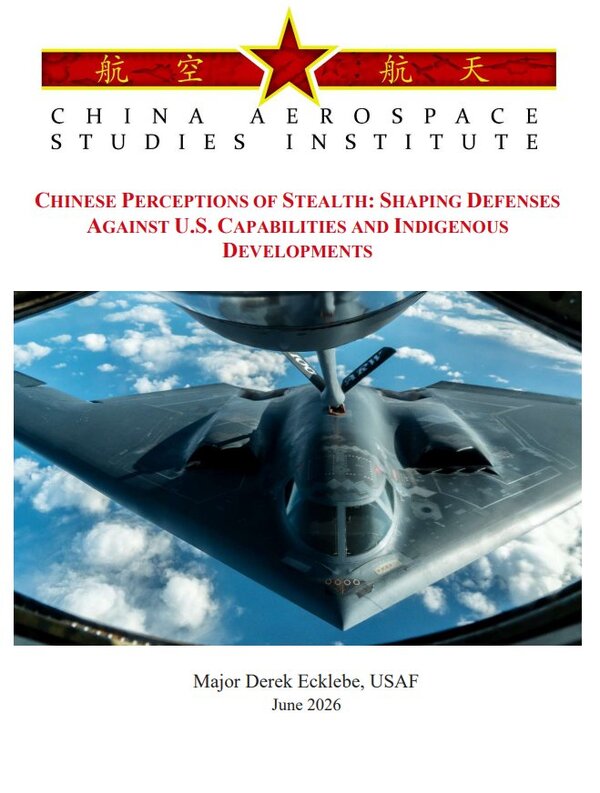
Recent analysis highlights that fundamental perceptions of stealth differ radically. While one side views stealth simply as an "invisible fighter jet," advanced forces operate stealth as an integrated "system of systems"—one that organically combines intelligence, electronic warfare, mission planning, command and control (C2), and pilot experience. The core lesson is simple: hardware can be copied quickly, but the underlying way of war cannot easily be replicated.
[Two Radically Different Conclusions Drawn from the F-117 Downing]
A pivotal historical event was the 1999 shootdown of an F-117 Nighthawk during air campaigns in Yugoslavia. At the time, the world was shocked when a Soviet-era SA-3 surface-to-air missile downed an F-117—marking the first combat loss of a stealth aircraft in history. Observers interpreted the incident as a sign of a fatal vulnerability in stealth technology, leading to intense efforts to secure aircraft debris. Speculation remained for years regarding attempts to destroy those salvaged remnants.
However, the operational conclusions drawn by the opposing side were the exact opposite. Investigations revealed that the downing was not due to a failure of stealth technology itself. Rather, the aircraft had flown repetitive flight paths, allowing defense forces to analyze the pattern and set up an ambush. In short, the failure was operational, not technological.
Tactics were immediately revised. Flight paths were no longer repeated, mission plans were dynamically modified, and stealth operations were more tightly integrated with electronic warfare (EW) support and intelligence assets. The stealth fighter was no longer operated as a standalone platform, but within an integrated system alongside Airborne Early Warning and Control (AEW&C) aircraft, satellites, electronic attack platforms, and intelligence assets.
As a result, no stealth aircraft has been downed by enemy fire in similar operations since. However, key lessons were misread elsewhere. Conclusions were drawn that "low-frequency radar is all that is needed to track stealth," leading to vast resources being focused on developing meter-wave low-frequency radars such as the YLC-8E and JY-27A. While one side changed its tactics, the other focused on changing its equipment. This divergence explains a crucial military capability gap today.
[Operating Stealth as a "System of Systems," Not Just an "Aircraft"]
The essence of stealth lies beyond the airframe itself. Operational literature frequently describes stealth in terms of hardware specifications—such as Radar Cross-Section (RCS), low-frequency detection ranges, and engine thrust. In contrast, advanced military doctrines treat stealth as a force multiplier integrated with intelligence, electronic warfare, mission planning, command and control, and pilot tactics.
When deploying stealth aircraft, they are never sent in isolation. Prior to a strike, intelligence assets analyze enemy Integrated Air Defense Systems (IADS), electronic warfare assets jam radar networks, and real-time data sharing continuously updates flight paths and strike priorities. Combined with Tactics, Techniques, and Procedures (TTPs) refined through extensive combat experience and robust maintenance logistics, this constitutes a complete warfighting system. Standalone developments often fail to incorporate the importance of these "invisible capabilities."
[Analysis Validated in Three Recent Conflict Zones]
This conceptual divide has repeatedly played out on the real-world battlefield, where deployed air defense systems performed poorly in real combat conditions.
Venezuela: During Operation Absolute Resolve to capture President Nicolás Maduro, air defense networks relied heavily on the JY-27A low-frequency radar, which had been marketed as capable of detecting F-22s and F-35s at ranges up to 400 kilometers. The operational reality proved otherwise. Radar networks failed to detect incoming aircraft, allowing special operations helicopters to penetrate as far as Caracas virtually unopposed. Despite investing roughly $2 billion in air defense infrastructure—including the JY-27A as well as S-300VM and Pantsir-S1 systems—none demonstrated effective operational capability. This was not simply a failure of a single radar. Deployments of stealth alongside EW assets, intelligence networks, and adaptive mission planning meant the radar was not fighting a single stealth aircraft, but confronting an integrated warfighting architecture.
Iran: Following the loss of significant air defense assets during clashes, long-range HQ-9B air defense systems were deployed to fill the void. However, during large-scale strikes targeting top leadership, the Islamic Revolutionary Guard Corps (IRGC), and military headquarters, the HQ-9B failed to play a decisive role, leaving core command structures exposed to severe damage. The system underperformed across multiple consecutive operational engagements. While equipment suppliers denied delivery, local personnel confirmed substantial deployments. Victory was decided not by raw hardware specifications, but by the operational architecture managing them.
Pakistan: During military clashes between India and Pakistan, deployed HQ-9 and HQ-16 series air defense networks failed to deliver expected results. Indian forces effectively neutralized air defense assets around Lahore and Sialkot during Operation Sindoor. Assessments noted that the defensive systems failed to perform at expected levels. Notably, Pakistani-operated J-10C fighters and PL-15 air-to-air missiles earned relatively favorable reviews, highlighting a performance divide between strike platforms and defensive/detection architectures in combat environments.
All three cases share a common thread: while focus was placed on improving individual radar and interceptor specifications, operational doctrine advanced an entire approach to warfighting designed to neutralize those systems altogether.
[Challenges Facing Military Modernization Revealed by the J-35A]
Visually, the newly unveiled J-35A closely resembles the F-35. Observers note similar design choices in stealth geometry, internal weapons bays, and sensor placements.
However, the true difference lies not in external appearance, but in operational concept. The F-35 functions as a "sensor node" connecting fighters, airborne early warning assets, satellites, naval vessels, and ground command centers into a unified network. Information gathered in-flight is shared in real time across platforms, and software updates continuously adjust capabilities against emerging threats.
In contrast, assessments indicate that the J-35A has yet to achieve a comparable level of data fusion or software-centric operational integration. While the airframe design may be similar, a significant gap remains in the operational ecosystem required to bring that platform to life. Advanced hardware can be acquired through reverse-engineering and capital investment, but tactical doctrines, maintenance cultures, operational experience, and software integration built over decades require time and real-world exposure to mature.
[The Strategic Context of Operational Capabilities]
The significance of these operational evaluations lies in signaling how military modernization is assessed and how future competition is framed.
Over the past two decades, rapid catch-up efforts have narrowed the technological gap across stealth fighters, aircraft carriers, hypersonic missiles, long-range radars, and artificial intelligence. However, confidence remains that an operational architecture advantage will endure far longer than a pure technological edge. Modern warfare is no longer decided by a few superior weapons platforms. It demands the seamless integration of satellites, cyber warfare, electronic warfare, AI, intelligence analysis, logistics, maintenance systems, C2 networks, and international alliances into a single operational system.
[Why Times Insight]
The operational evaluation of stealth platforms highlights key strategic gaps in military modernization.
The central message is clear: while advanced hardware can be rapidly replicated, an integrated warfighting architecture accumulated over decades cannot. Future military superiority will be defined by the integration of intelligence, electronic warfare, software, command and control, and real-world combat experience into a unified system.
While military technology continues to advance rapidly, the real gap lies not in individual platform performance, but in the capability to link those platforms into a living warfighting ecosystem. Victory in future conflict will belong not to the nation that builds better weapons, but to the nation that connects and operates them most effectively.

-중국 푸단대학교 한국연구원 객좌교수
-전 EDUIN News 대표
-전 OUR NEWS 대표
-제17대 대통령직인수위원회 정책기획팀장
-전 대통령실 홍보기획비서관
-사단법인 한국가정상담연구소 이사장
-저서: 북한급변사태와 한반도통일, 2012 다시우파다, 선거마케팅, 한국의 정치광고, 국회의원 선거매뉴얼 등 50여권