
Update2026.10.24 (토)

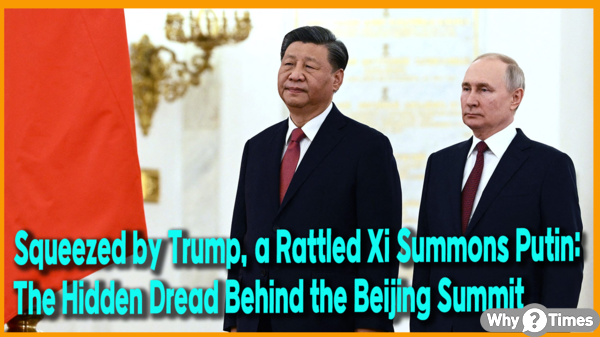
[Squeezed by Trump, Xi Embraces Putin to Hedge Against the United States]
Assessments of the recent U.S.-China summit remain divided. Anti-Trump media outlets—such as The New York Times (NYT), The Washington Post (WP), and CNN—have offered highly critical evaluations. Conversely, congressional focused outlets like The Hill and even Arab networks like Al Jazeera have viewed it more positively. One thing, however, is clear: a truly objective evaluation can be reached simply by observing Beijing’s subsequent behavior. Following the U.S.-China summit, China’s actions have been unexpectedly frantic. Xi Jinping’s move to summon Vladimir Putin to Beijing immediately after meeting with Donald Trump lays bare a deepening, shared sense of crisis gripping both China and Russia.
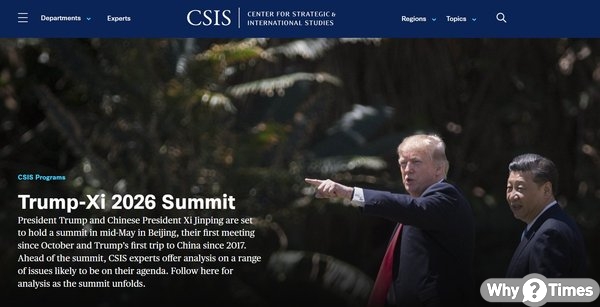
On May 16, the Center for Strategic and International Studies (CSIS), a prominent U.S. think tank, analyzed that "while it is true Xi possesses the confidence to confront Trump on several core issues—including tariffs, technology controls, and rare earths—the mere fact that Beijing so aggressively pushed to host this summit demonstrates that China is far more desperate for specific outcomes than many observers believe."
Al Jazeera echoed this sentiment, noting: "China’s top priority was not to extract immediate concessions in negotiations with the U.S., but rather to recalibrate a strategic landscape and negotiating momentum that are currently turning against it. Beijing sought to pull Sino-U.S. relations back into a manageable framework. It approached the summit not with an offensive posture, but with an eye toward status-quo maintenance and defensive realignment." The network added, quoting expert analysis, that "against the backdrop of a cratering property market, a demographic cliff, and stagnant domestic consumption, Xi’s meeting with Trump was born out of sheer desperation rather than choice."
[The Rare Earths Card and the Flip Side of Concessions: How Hard Did Trump Press?]
Commenting on this dynamic, the Council on Foreign Relations (CFR) noted: "Xi Jinping played his 'emergency card' by weaponizing rare earth export controls to counter Trump’s unprecedented 2025 tariff hikes (which exceeded 140%), ultimately succeeding in applying maximum pressure on Trump. However, this rare earths card is not an eternally viable weapon." The CFR further pointed out that "for Xi, it was a card with clear limitations, yet the fundamental problem lies in the fact that Beijing had virtually no other leverage left to deploy against the United States."
Ultimately, China’s gains from the U.S.-China summit were marginal. Xi attempted to extract a critical concession from Trump on the Taiwan issue—specifically, a firm declaration that "the United States does not support Taiwan independence." However, Trump’s silence on the matter meant Xi failed to achieve his primary objective. Consequently, Xi acutely realized that he required more potent leverage to pressure Trump's America. That leverage was Vladimir Putin.
[Xi's Counter-Strategy: Embracing Putin to Confront the United States]
From Xi's perspective, inviting Putin to Beijing at this juncture is a calculated strategic countermeasure to Trump's pressure. Hong Kong’s South China Morning Post (SCMP) analyzed: "Summoning Putin to Beijing immediately after Trump’s departure sends an unambiguous signal to Washington." The move is intended to project the message that "China does not move solely at the whim of the United States, and that an improvement in Sino-U.S. relations will not shake the Sino-Russian alliance."
India’s The Week emphasized that "contrary to media assessments framing the meeting as a 'routine exchange,' it carries far deeper significance." The publication noted that "this marks the first time Beijing has invited the leaders of both the United States and Russia for bilateral formats in the exact same month." The Week evaluated that "Xi is executing a dual-track strategy, utilizing a display of solidarity with Putin to maximize his diplomatic leverage against Trump."
[A Rattled Putin: Why a Sino-US Rapprochement Spells Disaster for Russia]
Putin’s journey to Beijing is driven by a desperation that fully matches Xi’s. The Conversation, an independent, non-profit U.S. news outlet, analyzed: "The more stable and predictable U.S.-China relations become, the more the Russian president's role and influence will inevitably shrink." It added that "the outcome of this U.S.-China summit is particularly problematic for Putin." The outlet further noted: "To maintain his great-power status, Putin must either prove his strategic utility to both Washington and Beijing, or demonstrate his potential to act as a disruptive force. Yet, his hand has been significantly weakened on both fronts."
CNBC, quoting Professor Dennis Wilder of Georgetown University, analyzed that "Russia will grow highly anxious if overall U.S.-China relations improve." The network noted that "as a byproduct of the summit, China could scale back its support for Russia's war in Ukraine." This stems from the reality that the closer Beijing moves toward Washington, the less justification it has to sustain its economic and military lifeline to Moscow.
[Putin's Isolation and Weakened Hand: Ukraine, Iran, and a Scaled-Back Military Parade]
The Conversation further pointed out that "Putin’s precarious position becomes even more evident when examining the Chinese side of the ledger." It noted that "Xi and Putin’s last face-to-face summit occurred in September 2025, and they have held only a single virtual meeting since. This indicates that the diplomatic and physical temperature between the two leaders is no longer what it once was."
Concrete indicators of this shift are readily apparent. The Conversation explained: "The war in Ukraine is no longer Washington's top priority, as Trump’s key negotiators are heavily focused on the Iran issue." The report revealed that "during a April 29 phone call with Trump, Putin offered to transfer Iran’s highly enriched uranium to Russia. However, Trump rejected the proposal, demanding instead that Putin focus on ending the war in Ukraine."
The outlet added that "days later, the Kremlin decided to downsize its annual military parade in Moscow, citing concerns over potential Ukrainian attacks. This reflects a simultaneous convergence of diplomatic humiliation and military retrenchment."
[The Real Meaning Behind Peskov's Remarks: "We must go and find out firsthand"]
In a public briefing regarding these developments, Kremlin spokesperson Dmitry Peskov remarked: "Dialogue between the world's two largest economies is a subject of deep analysis for all nations, including Russia. We are evaluating the media reports, and we expect to obtain firsthand information during our visit to China."
Stripping away the diplomatic rhetoric, NBC News interpreted the true implication of this statement as unmistakable: "Russia cannot confidently ascertain what kind of deal China struck with Trump based on media reports alone. It means Putin must travel to Beijing in person to hear the truth directly from Xi’s own mouth."
Conversely, The Diplomat suggested that "the back-to-back scheduling of the U.S.-China summit and Putin’s visit to China hints at the potential for 'triangular diplomacy'." However, it noted that "unlike the Nixon-era Sino-U.S. rapprochement, which was weaponized to isolate the Soviet Union, this summit is unlikely to result in coordinated pressure on Russia regarding Iran or Ukraine." The Diplomat concluded: "While the structural dynamics evoke Cold War-era triangular diplomacy, the geopolitical interests of all three nations are far too intricately entangled for any single party to gain a unilateral advantage."
[A 'Partnership of Divergent Dreams' Forged by Mutual Desperation]
Ultimately, the upcoming Xi-Putin summit bears the distinct hallmarks of a "marriage of convenience" driven by the overlapping strategic necessities of both sides. Xi needs to flaunt solidarity with Russia to dilute Trump's pressure and bolster his bargaining chips against Washington. Putin, conversely, must fly to Beijing personally to avert his worst-case scenario: a reduction in Chinese assistance brought on by an improving U.S.-China relationship. As The Conversation assessed, the "no-limits partnership" between the two nations is becoming increasingly asymmetric. With China possessing a far superior economic and diplomatic standing, Russia’s structural dependence on China is hardening into a permanent fixture.
Russian Foreign Minister Sergey Lavrov sought to elevate the visit, emphasizing that "Russia-China relations run far deeper and are stronger than traditional political-military alliances." Yet, diplomatic circles view this very rhetoric as an paradoxical admission of Moscow's deep-seated anxiety. If an alliance were truly unshakeable, there would be no need to repeatedly and loudly proclaim it to the world. This Beijing summit is less a genuine display of unity and more a venue where each leader is searching for reassurance from the other.
[Both Xi and Putin Are Deeply Unsettled]
In the final analysis, Chinese President Xi Jinping’s decision to summon Russian President Vladimir Putin to Beijing so shortly after concluding his summit with Donald Trump represents a defensive consolidation by the authoritarian camp trying to push back against a U.S.-led unipolar order. On the surface, China appears to stand at the epicenter of major-power diplomacy. However, peering behind the curtain reveals the sheer vulnerability of a Xi regime cornered by the fierce pressure of the Trump administration, intersecting with the desperate survival strategy of a Putin regime that has become an international pariah following its war of aggression in Ukraine. This rendezvous between two autocrats threatening the free world is, in reality, nothing more than a fragile marriage of convenience devoid of mutual trust.
As CSIS noted, China’s desperate eagerness to orchestrate the U.S.-China summit proves that Beijing’s domestic situation is highly precarious. Furthermore, as foreign outlets like Al Jazeera highlighted, Xi’s foremost priority was not to go on the offensive, but to defensively restructure a global strategic alignment that is turning profoundly hostile toward China. In short, Xi's posture before Trump was not driven by the confidence of an equal partner, but by the raw desperation to avert a catastrophic economic fallout.
Amid this, Russia’s profound anxiety is equally palpable. Kremlin spokesperson Peskov’s overt display of insecurity—stating that they "must go and find out firsthand"—exposes the raw reality of the Sino-Russian partnership. Putin flying to Beijing to verify matters directly from Xi's lips because he cannot even trust media reports paints the portrait of a near-bankrupt debtor nervously reading the mood of his primary creditor, rather than an equal ally.
Foreign Minister Lavrov’s strained rhetoric claiming their ties are "deeper than a traditional military alliance" paradoxically proves just how brittle their solidarity truly is—it is a castle built on sand. Truly secure relationships do not require shouting their unity from the rooftops. In this regard, the upcoming Beijing summit is not an arena for a grand strategic alliance; it is an anxious partnership of convenience where two authoritarian leaders, suffocating under the weight of American pressure, grasp at one another simply to verify their mutual survival.

-중국 푸단대학교 한국연구원 객좌교수
-전 EDUIN News 대표
-전 OUR NEWS 대표
-제17대 대통령직인수위원회 정책기획팀장
-전 대통령실 홍보기획비서관
-사단법인 한국가정상담연구소 이사장
-저서: 북한급변사태와 한반도통일, 2012 다시우파다, 선거마케팅, 한국의 정치광고, 국회의원 선거매뉴얼 등 50여권