
Update2026.11.15 (일)


[ $130 Billion Vanishes… What Happened to World No. 1 CATL? ]
The market capitalization of Contemporary Amperex Technology Co. Limited (CATL), the world’s largest electric vehicle (EV) battery maker, has been nearly halved in just six months. While revenue continues to hit record highs, profit margins have fallen for three consecutive quarters, and automakers such as Xiaomi and Li Auto are steadily switching suppliers. As domestic EV demand in China cools and price wars intensify, CATL has sought a breakthrough in energy storage systems (ESS), but the prospect of further U.S. import restrictions is narrowing even that path. President Xi Jinping’s leadership has cultivated EVs, batteries, and solar power as new growth pillars to offset the real estate slump. Now that expanding scale is failing to translate into profits even in batteries—a sector where China dominates the global market—Beijing is cornered into deciding whether additional investment will prop up growth or merely exacerbate overcapacity.

Hong Kong’s South China Morning Post (SCMP) reported on the 14th that CATL’s market value has shrunk by nearly 50% over six months, wiping out roughly $130 billion (about 174 trillion won) in corporate value amid a stock market sell-off. Speaking at a conference last month, CATL Chairman Robin Zeng emphasized growth potential, stating that battery storage is becoming an indispensable new infrastructure for power systems. However, short-term analyst outlooks cited by SCMP are far from bright, warning that if the United States further tightens import regulations while domestic sales conditions deteriorate, battery makers could be left saddled with excess production capacity.
[ Revenue Rose, But Profits Fell ]
What rattled the market was the quality of CATL’s growth. Third-quarter revenue hit a quarterly record of 165.22 billion yuan (about 33 trillion won), up 58.58% from a year earlier. In contrast, net profit attributable to shareholders rose only 14.54% year-on-year to 21.25 billion yuan (about 4.3 trillion won), down 5.77% from the previous quarter. According to regulatory filings compiled by Taiwan’s TechNews, gross profit margin fell for the third straight quarter to 20.69%, its lowest level since the fourth quarter of 2022, while operating cash flow dropped 23.6% year-on-year. It is a classic sign of profitless growth, where top-line scale expands while retained earnings shrink.
Inventory and investment indicators are also flashing warning signs. Inventory assets at the end of the third quarter swelled 53% from the start of the year to 144.8 billion yuan. Gross margins fell 5 percentage points year-on-year to 18% for power batteries, and 6 percentage points to 20% for ESS batteries. Investment banks have turned sour as well: JPMorgan downgraded its rating on CATL’s Hong Kong shares from Overweight to Neutral and slashed its target price by roughly 30%, from HK
725???????????????? 725toHK500. Defensive moves by the company have failed to gain traction. On July 24, CATL announced a record A-share buyback and cancellation plan worth 20 billion to 40 billion yuan (about 4 trillion to 8 trillion won), yet actual repurchases through September 30 totaled just 3.3 billion yuan (about 660 billion won).
[ Automakers Revolt: The ‘De-CATL’ Movement ]
A deeper cause behind the stock slump is customer defection. In the first half of this year, CATL posted a net profit of 43.3 billion yuan (about 8.7 trillion won), whereas the combined net profit of 15 major listed automakers stood at 21 billion yuan (about 4.2 trillion won)—less than half of CATL’s earnings. As early as 2022, then-GAC Chairman Zeng Qinghong publicly complained that because batteries account for 40% to 60% of vehicle costs, automakers were essentially working for CATL. That simmering discontent turned into action this year. Li Auto switched the entire battery supply for its new L8 model to Sunwoda. Xiaomi dropped CATL cells from its new N70 and N90 models, broadening its supply chain to include its own in-house batteries alongside CALB and Sunwoda. Huawei-affiliated Harmony Intelligent Mobility Alliance also broke CATL’s exclusive supply structure by adopting LFP batteries from Gotion High-Tech for its all-electric AITO M6 model.
To be sure, CATL’s market dominance has not collapsed. Its global power battery market share actually rose 2.2 percentage points to 40.2% in the first half of the year, and it maintained the world’s No. 1 spot in ESS battery shipments with a 27.1% share. What the market is questioning is not today’s figures, but whether this moat will hold three to five years from now. As perceptions shift from an irreplaceable monopoly to a market leader facing structural share erosion, CATL’s valuation is being fundamentally repriced.
[ Beijing Draws the ‘Anti-Involution’ Blade ]
Ironically, the most direct variable pressuring CATL is the Chinese government itself. Vowing to curb cutthroat industry competition—known as "involution" (neijuan)—the Xi Jinping administration has begun rolling back tax incentives. The Ministry of Finance and the State Taxation Administration announced that the value-added tax export rebate rate for battery products was cut from 9% to 6% starting April 1, and will be completely abolished on January 1, 2027. Starting September 1, a 2% consumption tax was imposed on liquid lithium-ion batteries, with the rate set to rise to 4% by September 2027. By contrast, solid-state batteries remain tax-exempt through the end of 2028, saddling CATL’s mainstay liquid lithium batteries with a permanent cost disadvantage. CnEVPost noted that reduced tax support has forced CATL into renegotiating cost-sharing arrangements with clients.
Overcapacity has already hardened into a structural problem. Several local governments have halted approvals for new battery production capacity, while planned ESS battery capacity approaches 2 TWh (2,000 GWh)—far exceeding global demand. Domestic demand has cooled as well. With the purchase tax exemption for new energy vehicles halved starting January 1 this year, EV buyers now face a 5% purchase tax. According to data from the China Passenger Car Association, first-half sales of electrified vehicles fell 13% to 4.73 million units. The broader macroeconomy is also sluggish: indicators released in mid-September showed China’s industrial output and retail sales growth slowing to their lowest pace in over a year, underscoring the twin pressures of weak domestic demand and trade friction.
[ Washington’s Blockade: Executive Order 14421 ]
Externally, U.S. pressure is tightening. On August 26, President Donald Trump signed Executive Order 14421, designating power transformers, grid-connected inverters, and battery energy storage systems (BESS) as regulated equipment, with specific rules for battery storage due by December 24. Norwegian energy consultancy Rystad Energy assessed that the order’s impact will fall more heavily on batteries than transformers, given that 50% of U.S. lithium-ion battery imports over the 12 months through June 2026 came from China, with no alternative suppliers capable of replacing them. Tariff barriers have already climbed, with U.S. tariffs on Chinese batteries rising from roughly 37.5% to 55% on January 1 this year.
For CATL, a core growth market is under threat. According to figures compiled by Chinese financial media, CATL accounts for nearly 60% of the U.S. ESS market, serving as a primary supplier for Tesla’s energy storage business and Fluence. CATL was also added to the U.S. Department of Defense’s list of Chinese military-linked companies last year, a designation the company has disputed as erroneous. Although Chairman Zeng told The Wall Street Journal (WSJ) that building America’s EV future without CATL would be difficult and prohibitively expensive, political winds in Washington are blowing in the exact opposite direction.
[ Ningde, Xi Jinping, and the Warning of ‘Rushing In En Masse’ ]
CATL’s crisis carries political implications beyond corporate performance due to its personal ties to Xi Jinping. Ningde in Fujian Province, where CATL is headquartered, is where Xi served as prefectural party secretary from 1988 to 1990. Ningde grew alongside CATL into the "capital of China’s new energy batteries." According to the Fujian provincial government, output from Ningde’s lithium battery industrial cluster exceeded 300 billion yuan in 2025, with local CATL manufacturing capacity alone reaching 330 GWh.
Xi himself foresaw this risk. During a closed-door meeting at the National People’s Congress in March 2023, when Chairman Zeng reported a 37% global market share, Xi remarked that he felt both "delighted and worried." According to Xinhua News Agency, Xi cited the danger of industries "rushing in en masse, only to scatter in disarray" (yihong er shang, yihong er san). Roughly three years later, that warning has become reality. Competing local governments rushed to attract battery plants, causing capacity to far outstrip demand—and the tax overhaul meant to clean up the mess is now eating into the profits of the industry’s top player first.
Batteries form the central pillar of China’s export-driven growth narrative. According to China’s General Administration of Customs, exports of the "new three" products—EVs, solar panels, and lithium batteries—reached roughly 1.3 trillion yuan in 2025, 3.5 times the 2020 level. Chairman Zeng noted at an event last year that CATL accounted for 120 GWh, or roughly 60%, of China’s 200 GWh in lithium battery exports during the first three quarters of 2025. Following the real estate downturn, CATL was the flagship of the alternative growth engine Beijing championed under the banner of "new quality productive forces." That flagship is now being squeezed simultaneously from three directions: sluggish domestic demand, a domestic policy reversal, and a U.S. blockade.
[ Why Times Insight | When CATL Falters, Xi Jinping’s Growth Formula Falters ]
CATL is still a profitable company, so declaring this stock plunge immediate proof of regime collapse would be premature. Nevertheless, the episode symbolically exposes the structural limits of Xi Jinping’s state-led industrial policy. Subsidies and inter-provincial competition inflated production capacity; when cutthroat price wars ensued, the central government withdrew tax breaks, passing the bill directly onto its most competitive national champion. The vicious cycle of rushing in and scattering that Xi personally warned against in 2023 has played out inside the very industrial ecosystem he nurtured.
Even more noteworthy politically is the credibility of Beijing’s alternative growth engine. With traditional growth pillars like real estate and local government finances crumbling, Beijing has promoted advanced manufacturing—such as EVs and batteries—as its new economic driver. If even the frontrunner cannot escape shrinking margins, customer defections, and foreign blockades, the persuasiveness of the "new quality productive forces" narrative inevitably weakens. In this sense, CATL’s predicament can readily be read as a signal darkening the economic outlook for the Xi Jinping regime.

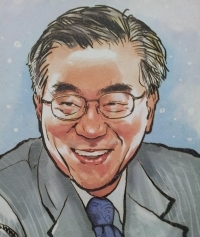
-중국 푸단대학교 한국연구원 객좌교수
-전 EDUIN News 대표
-전 OUR NEWS 대표
-제17대 대통령직인수위원회 정책기획팀장
-전 대통령실 홍보기획비서관
-사단법인 한국가정상담연구소 이사장
-저서: 북한급변사태와 한반도통일, 2012 다시우파다, 선거마케팅, 한국의 정치광고, 국회의원 선거매뉴얼 등 50여권