
Update2026.06.10 (수)


While the first US-China summit in nine years touted diplomatic achievements—namely an agreement on a "constructive and strategic stability relationship"—more than ten minor and major clashes disrupted the periphery of the summit on May 14 alone. Beneath the veneer of lavish protocol, the raw realities of the regime were laid bare to the international community. The friction captured during this summit transcends mere diplomatic gaffes; it serves as a symbolic indicator of the mounting anxieties within a declining Chinese Communist Party (CCP).

On May 15, Fox News reported that “the most tense moment of the US-China summit occurred during the visit to the Temple of Heaven,” adding that “multiple heated, physical altercations broke out between the Secret Service and Chinese police.”
AFP also reported that “Chinese security authorities blocked an armed US Secret Service agent, who was escorting White House journalists, from entering the Temple of Heaven grounds.” This triggered “a prolonged and increasingly heated argument between US and Chinese officials, delaying the press corps' entry into the grounds by nearly 30 minutes.”
According to AFP, “shouting was heard on the scene, witnessed firsthand by an AFP reporter.” When the press corps trapped inside the Temple of Heaven grounds protested, saying, "We need to get on the motorcade. Do you not understand what this means?", a Chinese official pushed back, stating, "Our security does not allow it." AFP noted that “US personnel eventually had to push past the Chinese team to narrowly join the presidential motorcade before it departed.”
AFP pointed out that this was not the only clash of the day. “At the Great Hall of the People, as officials from both sides attempted to manage journalists trying to film the start of the Trump-Xi meeting, a female US staff member suffered an ankle injury after her foot was stepped on.” The agency added that “US and Chinese officials remained in a state of friction all day over scheduling, positioning, and last-minute itinerary changes.”
Furthermore, AFP reported that “just prior to departure, US officials requested that journalists and delegation aides return all entry badges and souvenirs provided by the Chinese side.” These items, along with "burner phones" used by the delegation, were reportedly discarded in a trash bin beneath the steps of Air Force One—a move reflecting Washington's heightened vigilance regarding Chinese surveillance and cybersecurity.
The shock on the ground was not limited to physical altercations. During a live broadcast near Haidian Station in Beijing, prominent Fox News anchor Bret Baier opened with, “Big Brother is watching.” He reported, “There are cameras literally everywhere in Beijing. I can count at least 20 on this single corner. Everything here is captured.”
Baier noted, “Our crew's vehicle illegally parked for just two minutes, and it was immediately caught on camera. A fine notice of about $40 USD was instantly sent to the driver’s phone.” He added that this “raises real questions about how the Communist Party tracks citizens and calculates social credit scores.”
Meanwhile, the Australian Strategic Policy Institute (ASPI) stated in a report released late last year that “approximately 600 million surveillance cameras are operational across China, and Beijing is rapidly integrating AI-powered facial recognition and movement tracking technology into its existing surveillance grid.” The summit effectively exposed the world's largest digital surveillance infrastructure right before the eyes of the international press.
Among the most eye-catching details for foreign correspondents regarding President Xi Jinping was the observation that he appeared to be wearing elevator shoes (height-increasing footwear). This was widely interpreted as an attempt to match the height of President Donald Trump and project an image of equal standing.
Observers also noted that while President Trump appeared energetic—much like his 2017 visit to China—President Xi seemed relatively lacking in confidence and vitality. The number of high-ranking CCP officials attending the welcoming ceremony was noticeably smaller than in the past. While the US delegation maintained a relaxed demeanor, Chinese officials could not hide their somber expressions throughout the event.
Furthermore, President Xi was frequently spotted closely consulting his notebook during the meetings. This heavy reliance on a pre-arranged script and written notes is a habit Xi has consistently displayed in past summits, but during this particular bilateral meeting, he appeared to depend on his notebook for virtually the entirety of the conversation.
In tandem with these observations, no joint press conferences or US-China economic dialogues were held. Even during the visit to the Temple of Heaven, the two leaders only visited the Hall of Prayer for Good Harvests (祈年殿) and did not tour other areas together. Analysts also took note of the fact that the state-run broadcaster CCTV allocated an unusually short airtime for news coverage of the event.
In the footage released by authorities, the US delegation maintained a poised and comfortable attitude throughout the welcoming ceremony. Conversely, Chinese officials remained stoic, showing no emotion. China analysts interpreted this contrast not as a mere difference in personal temperament, but as a reflection of the diverging values the two systems instill in their officials and citizens.
On May 14, the diplomatic stage at the Great Hall of the People in Beijing was lavish. The two leaders traded compliments, and China spoke of "constructive strategic stability." However, to properly read this summit, one must look beyond the leaders' expressions and examine what foreign media found troubling enough to report.
Among the achievements disclosed by the White House immediately after the summit, the most notable takeaway was the agreement between the two leaders on keeping the Strait of Hormuz open and opposing Iran's possession of nuclear weapons. The White House stated that “President Xi Jinping made clear his opposition to the militarization of the strait and attempts to impose transit fees.” However, whether this agreement in principle translates into tangible action remains to be seen, particularly since China did not publicly disclose this portion of the talks.
The dozen or so incidents that unfolded during this visit are not mere trivial mishaps. Critics argue that the Chinese authorities' behavior—forcibly confining journalists to a separate room, blocking the entry of armed security detail, and preventing reporters from joining the motorcade while hosting the president of the world’s superpower on a state visit—unmasked the true nature of CCP governance, which prioritizes information control and the preservation of authority above all else within its territory.
AFP analyzed that “these clashes were not one-off incidents, but rather signals pointing to ongoing tensions between the staff of both nations.” The agency added, “With the two leaders scheduled to meet three more times within 2026, the friction witnessed in Beijing suggests a rocky year ahead for the logistical and support staff.”
President Trump’s visit to Beijing went beyond standard diplomatic scheduling; it marked the prelude to a massive systemic war waged by the leader of the free world in the heart of communism. The overwhelming scale of security brought by the US and the sheer majesty of the "White House on the move" served as a potent warning to the CCP, showcasing America's unyielding national resolve under any environment.
In stark contrast, China's conduct exposed the ugly core of its dictatorial regime. The ubiquitous surveillance cameras witnessed firsthand by foreign correspondents from Fox News and other outlets proved that the nation of China itself functions as a massive prison. A foreign anchor's blunt exclamation, “This is communism!”, perfectly encapsulates how fraudulent the CCP's claim of a “modernized China” truly is.
The most shocking element was the heavy-handed physical suppression and control imposed on the White House press corps. Confining journalists to small rooms and blocking them from joining the presidential motorcade reveals the CCP's inherent DNA of stifling press freedom. Far from showing basic courtesy to guests, this was the desperate thrashing of cowards who fear the truth and seek to blindfold the world.
President Xi's demeanor on the scene compounded this narrative. His apparent use of elevator shoes to match President Trump's height, coupled with his lack of confidence—relying entirely on his notebook while contrasted against an energetic Trump—suggests that the psychological pressure bearing down on the CCP leadership has reached a critical threshold.
In particular, the complete absence of a joint press conference or economic dialogue signifies that the rift between the two sides has widened to an irreconcilable degree. The dominant analysis indicates that Xi failed to offer any proper counterarguments in the face of President Trump’s intense pressure. This implies that the CCP’s ambitions to challenge the US-led international order have hit a wall of reality.
In conclusion, the Beijing summit served as a global announcement that the CCP is no longer a match for the United States, and that its internal foundations are rotting away. The formidable power of the United States and the value of freedom shine like a sun that cannot be obscured by any CCP surveillance apparatus or brute force.
This situation must serve as a stark reminder of the true nature of the Chinese Communist Party. Strengthening the ROK-US alliance remains our sole path to safeguarding ourselves against such reckless communist hegemonism. The decline of the Chinese Communist Party is now becoming an irreversible current of history.

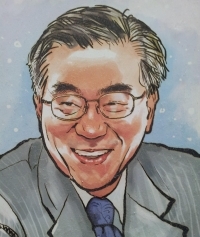
-중국 푸단대학교 한국연구원 객좌교수
-전 EDUIN News 대표
-전 OUR NEWS 대표
-제17대 대통령직인수위원회 정책기획팀장
-전 대통령실 홍보기획비서관
-사단법인 한국가정상담연구소 이사장
-저서: 북한급변사태와 한반도통일, 2012 다시우파다, 선거마케팅, 한국의 정치광고, 국회의원 선거매뉴얼 등 50여권