
Update2026.06.10 (수)

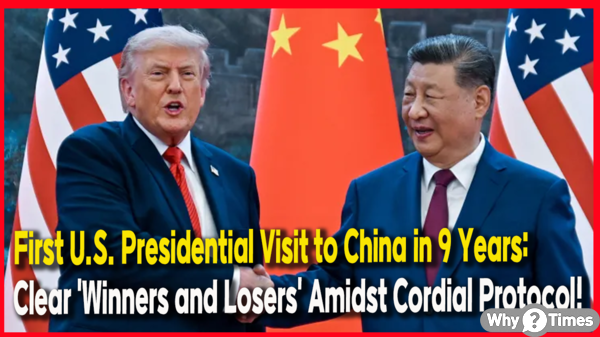
[China Fails to Extract Taiwan Concessions Despite Intense Pressure]
During the Beijing Summit on May 14, which extended 40 minutes beyond the scheduled time due to a fierce tug-of-war, President Trump walked away with significant economic "war trophies"—including the purchase of 200 Boeing aircraft, soybeans, and energy products. In contrast, President Xi Jinping’s strategy to secure U.S. concessions on the Taiwan issue missed the mark entirely.
Trump, maintaining that the Taiwan issue would not be part of the negotiation agenda, remained silent on the matter during the talks. Instead, Secretary of State Marco Rubio delivered a stern warning, stating that U.S. policy toward Taiwan remains unchanged and cautioned that any use of force by China would be a "terrible mistake" followed by global repercussions. This clear divergence in outcomes defined the winner of the summit.
CNBC reported on the 15th that "President Trump defined the core objective of this visit as trade and deals," focusing on expanding access for U.S. companies to the Chinese market and increasing China's purchase of American goods. To support this, Trump was accompanied by a high-profile business delegation including Elon Musk, Jensen Huang (Nvidia), Tim Cook (Apple), Larry Fink (BlackRock), and Boeing CEO Kelly Ortberg. Regarding the results, CNBC noted, "The final tally was clear: Trump left Beijing with his hands full, while Xi left virtually empty-handed."
[Trump’s Harvest: Boeing, Soybeans, and Energy]
In an interview with Fox News’ Hannity on the day of the summit, President Trump revealed that China agreed to purchase 200 Boeing aircraft. Bloomberg highlighted that this marks China’s first purchase of U.S. commercial aircraft in nearly a decade. Additionally, President Xi pledged to buy American soybeans, oil, and liquefied natural gas (LNG).
The South China Morning Post (SCMP) described this as the "3B Deal" (Beans, Beef, Boeing)—a staple of Trump’s negotiation menu since his first term. Analysts suggest this deal is a landmark turning point for Boeing, which had effectively lost the Chinese market for a decade due to trade disputes and safety issues. Furthermore, the two nations agreed to establish a "Board of Trade" to manage bilateral commerce through traditional instruments like quotas and voluntary export restraints.
[What Xi Wanted: U.S. Concessions on Taiwan]
President Xi’s strategy was to offer economic incentives—such as maintaining rare earth exports and increasing investments in the U.S.—in exchange for strategic concessions on Taiwan. According to the Council on Foreign Relations (CFR), China sought three major goals:
Suspension or reduction of U.S. arms sales to Taiwan.
Shifting official U.S. rhetoric from "not supporting Taiwan independence" toward "supporting peaceful unification."
A long-term U.S. commitment to forgo military intervention in the event of a Chinese invasion.
However, these efforts were met with a firm wall. While Xi emphasized that "the Taiwan issue is the most critical matter in U.S.-China relations," the U.S. side refused to engage on these terms.
[Trump’s Strategic Silence and Rubio’s Direct Warning]
In the face of Xi’s persistent offensive, Trump maintained a disciplined silence. Even during a joint visit to the Temple of Heaven, Trump ignored reporters' questions regarding Taiwan, offering only a brief comment that the meeting was "excellent."
Notably, the official White House summary of the summit did not mention Taiwan once, focusing instead on economic cooperation and regional security in the Middle East. Conversely, the Chinese Foreign Ministry's statement highlighted Taiwan as a core agenda item. This "split-screen" reporting underscores that Xi’s strategy failed to gain traction.
The stronger signal came from Secretary of State Marco Rubio, who told NBC News that "U.S. policy toward Taiwan has not changed." He further warned that any attempt to annex Taiwan through force or coercion would have global consequences, effectively putting China on the defensive.
[Chinese Stock Market Reacts with "Sense of Betrayal"]
The disappointment was immediately reflected in the Chinese financial markets. After a pre-summit rally driven by high expectations, the markets plummeted once the details (or lack thereof) emerged.
On the day of the summit, the Shanghai Composite Index fell 1.5%, and the ChiNext Index dropped 2.2%. Retail investors took to social media (Weibo) to express their frustration, with many complaining that the "mutual benefits" promised by the government were nowhere to be seen. Analysts noted that the "3B Deal" benefits U.S. exports but does not represent a strategic victory for China’s long-term interests.
[Conclusion: Trump’s Victory, Xi’s Frustration]
The final scorecard of this summit is stark. Trump secured tangible economic gains and established a framework for trade management while maintaining the strategic status quo on Taiwan. President Xi, despite providing lavish hospitality and high-level protocol, failed to change the "status quo" he so desperately sought to alter. The summit proved that while Beijing was prepared with a sophisticated Taiwan strategy, it was ultimately neutralized by the Trump administration's "silence and warning" tactic.

-중국 푸단대학교 한국연구원 객좌교수
-전 EDUIN News 대표
-전 OUR NEWS 대표
-제17대 대통령직인수위원회 정책기획팀장
-전 대통령실 홍보기획비서관
-사단법인 한국가정상담연구소 이사장
-저서: 북한급변사태와 한반도통일, 2012 다시우파다, 선거마케팅, 한국의 정치광고, 국회의원 선거매뉴얼 등 50여권